
In diesem Artikel
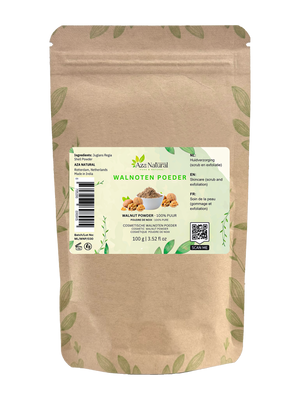
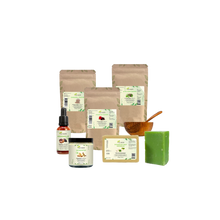
Walnut powder is the ground shell of the walnut: the hard, woody husk that sits around the kernel of the fruit of the walnut tree, Juglans regia, milled to a gritty powder. On the label of our walnut powder the ingredient reads Juglans Regia Shell Powder, in which shell is the husk, and that is the only ingredient; the label says made in India and names skin care, scrub and exfoliation as the use. It is a light brown to brown powder with a faint woody smell, sold in resealable bags of 100, 250 and 500 grams.
Many people search for 'walnut powder' or search for 'walnut powder benefits and uses'. We make no claim about what a scrub with this powder does to the skin: the label says nothing about that, and neither do we. What you can check yourself is what the label says, that this is ground shell and not ground nut, why the grain scrubs, how to mix it and how much to use. That is what this guide is about. The old version of this page called the powder ground walnut; the label says otherwise, and the label wins.
Walnut powder at a glance
- Label: Juglans Regia Shell Powder, the only ingredient; made in India; cosmetic, for scrub and exfoliation.
- What it is: the ground shell of the walnut, not the kernel; the kernel with its fat is not in it.
- Colour and smell: light brown to brown; a faint woody smell with a hint of nut.
- Texture: gritty; it does not dissolve in water and does not swell, so the grain stays a grain until you rinse it away.
- Use: a scrub for body, feet and hands, mixed with oil or black soap; half a teaspoon through a clay mask; external use only, not for the kitchen.
- Allergen: walnut is on the European list of fourteen allergens; anyone who reacts to nuts uses it only after a word with a doctor.
- Bag and storage: 100, 250 or 500 grams, resealable; cool, dry and dark, twelve months after opening.
Ground shell, not ground nut
In English, walnut powder is also a name for ground walnut kernel stirred through milk or porridge. That product this is not. The label says Shell Powder: the husk, the hard casing you need a nutcracker for, ground up. The kernel, the soft, fatty part inside, is not in this bag. That is why the powder is dry and woody rather than oily, why it does not go rancid the way a ground nut would, and why it is a cosmetic scrub grain and not a food. From the same tree we sell one other product, walnut oil, which is pressed from the kernel and has its own label; the two have nothing in common but the tree.
Why the grain scrubs and does not dissolve
The shell of a walnut is one of the hardest casings a plant makes, a dense layer of lignin and cellulose, and ground up it keeps that hardness. Every grain is a small, angular piece of wood that does not dissolve in water, does not swell and does not soften; that is exactly why it is used as a scrub grain. It scrubs as long as you rub and rinses away with the water.
That makes it different from the two other grains people use in the bathroom: salt and sugar dissolve as soon as they get wet, so a salt scrub turns milder by itself and is gone after a minute, and clay swells into a paste that absorbs rather than scrubs. Walnut powder does not change under the shower, so how hard it scrubs is decided by you, with the amount, the pressure and the time. Hence the first rule with this powder: little, light and short. How finely the shell is ground, the label does not say, and so we name no grain size.
How to mix a scrub
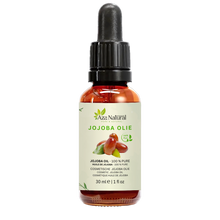
Put a tablespoon of walnut powder in a small bowl or in the palm of your hand and add just enough liquid to make a thick, spreadable paste. With an oil that is about a tablespoon of oil to a tablespoon of powder; jojoba oil is a good choice, because it has little smell, does not turn rancid quickly and is not a nut. With black soap, take a walnut-sized blob to a tablespoon of powder; the soap washes, the grain scrubs, and you rinse both away in one go. With water alone you get a dry, harsh paste that scrubs harder; take less powder and more water then. Mix what you need each time: a paste with oil keeps a few days covered, a paste with water does not.
On the body
Under the shower, wet the skin well and turn the water off for a moment. Take a little of the paste on the fingertips or a washcloth and rub with light, circular movements over arms, legs, trunk and buttocks, a few seconds per spot; do not press, because the grain does the work and not the force. Skip the chest, the neck and any place where the skin is thin, or go over them very lightly. Then rinse with plenty of lukewarm water until no grain is left on the skin and pat dry.
Apply an oil or a cream afterwards, because freshly scrubbed skin feels dry. Once or twice a week is enough; scrubbing more often or harder gives no better result, only red skin. The first time, try a small patch on the arm or the leg and look at the skin the next day.
On feet, heels and hands
The feet are where walnut powder is at its best, because the skin of the heels and the ball of the foot is thick and takes a grain that would be too much elsewhere. Soak the feet in warm water for five to ten minutes first, then rub a tablespoon of powder mixed with black soap or oil for a minute over the heels, the sides and the ball of the foot; skip the instep and the skin between the toes. Rinse, dry well and apply a cream or a butter, for instance from the hands and heels collection.
For the hands a teaspoon of powder with a few drops of oil is enough: half a minute over palms, fingers and knuckles after DIY, gardening or painting, rinse, then a hand cream. Feet once or twice a week; hands only when they need it.
Through a clay mask, and about the face
Stir half a teaspoon of walnut powder through two teaspoons of mixed clay, ghassoul or white clay; apply the mask as usual, and when rinsing rub gently in circles for a few seconds before you wash everything away. The mask does the absorbing, the grain the scrubbing at the end.
On the face, walnut powder is a grain that asks for care: the skin there is thinner than on the body, and the shell is wood. If you want it anyway, mix half a teaspoon of powder into a tablespoon of oil or mask, far thinner than for the body, rub without pressure for at most half a minute, stay well away from the eyes and the lips, and do it no more than once a week. If the grain feels too coarse on the cheek, this powder is for body and feet and not for the face; the label does not name the face, and we say no more about it than this.
How much you need and which bag to choose
A teaspoon of walnut powder weighs about 3 to 4 grams and a tablespoon about 10 grams; shell is heavier than clay. A scrub for the whole body takes one to two tablespoons, 10 to 20 grams; the feet a tablespoon; the hands a teaspoon; a clay mask half a teaspoon, about 2 grams. A bag of 100 grams is therefore five to ten whole-body scrubs or about fifty masks with a grain in them; 250 grams twelve to twenty-five body scrubs; 500 grams twenty-five to fifty. Anyone who scrubs the body once a week does one to two months with 100 grams and six months to a year with 500 grams.
To try the powder, or for masks and hands only, 100 grams is enough for months; for weekly body or foot scrubs 250 grams is the handy size; 500 grams is cheapest per gram. All sizes hold the same powder. What is left over goes in the bin, not down the drain.
How to store it
Cool, dry and dark, in the resealed bag; close it after every use and keep a wet spoon out of it, because damp makes the powder clump and spoil. The dry powder itself keeps well: the symbol on the label gives twelve months after opening. Other scrub grains and powders are in the plant powders collection.
What to watch out for
External use only: this is a cosmetic scrub grain of ground shell, not for the kitchen and not for stirring through anything, even though it comes from a nut that is a food. Walnut is on the European list of fourteen allergens; this powder is shell and not kernel, but whether it carries traces of the kernel we cannot say without an analysis certificate, so anyone who reacts to walnut or other nuts uses it only after a word with a doctor. Test a little mixed paste on the inside of the wrist first and wait a day.
Do not use it on broken, grazed, sunburnt or irritated skin, on open spots or around the eyes; if grain gets into an eye, rinse at once with plenty of lukewarm water. The powder is dusty; do not breathe it in, and keep the bag out of reach of children. Rinse the shower or basin with plenty of water and put leftover paste in the bin: the grain does not dissolve, and a clump in the trap sets hard.
Frequently asked questions
Is walnut powder ground walnut?
Not this one. The label says Juglans Regia Shell Powder: the ground shell. The kernel is not in it.
Can I use it with a nut allergy?
Only after a word with a doctor. It is shell, not kernel, but traces we cannot rule out; fine Dead Sea salt is a scrub grain without any nut.
Why does it scrub harder than a salt scrub?
Because the grain does not dissolve. Salt melts away as you rub; shell stays a grain until you rinse it. So use little, light and short.
Can I use it on the face?
With care, far thinner than for the body, at most once a week, and away from the eyes. It is a grain for body and feet first of all.