
In this article
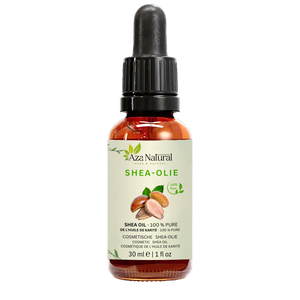
Shea oil is the liquid part of shea butter, the fat from the kernel of the shea nut, the fruit of the shea tree, Vitellaria paradoxa, which labels still call Butyrospermum parkii. On the label of our shea oil the ingredient reads Butyrospermum Parkii Oil, cold-pressed and made in Ghana, as a cosmetic oil for hair and skin; there is no second ingredient. It is a light yellow to golden yellow oil, fuller than a thin seed oil, sold in a 30 ml and a 100 ml bottle with a pipette. In Dutch the product is called shea olie, which is why that spelling appears in the address of this page.
Many people search for 'shea olie' or search for 'shea oil benefits'. We make no claim about what this oil does in or under the skin, on the scalp, to the hair or to muscles and joints: the label says nothing about that, and neither do we. What you can check yourself is what the label says, how the oil differs from the butter, how it looks, smells and feels, and how to use it, in what amount. That is what this guide is about.
Shea oil at a glance
- Label: Butyrospermum Parkii Oil, the only ingredient; cold-pressed; made in Ghana.
- Tree: the shea tree, Vitellaria paradoxa, of the sapodilla family; the oil comes from the kernel of the shea nut.
- Form: the liquid part of shea butter; how it was separated from the solid part is not on the label.
- Colour and smell: light yellow to golden yellow; mild and slightly nutty, the smell of shea, no added fragrance.
- Texture: fuller than a thin seed oil; stays on the skin for a moment and then absorbs; cloudy or thicker in a cold room.
- Use: dry skin on body, hands, elbows and heels; hair ends; cuticles; a home-made body butter or balm; external use only.
- Nut: shea is called a nut in the trade; it is not on the European list of fourteen allergens, but anyone who reacts to nuts tests first.
- Bottle and storage: 30 ml or 100 ml in dark glass with a pipette; cool, dark and closed, finish within a year.
The tree and the nut
The shea tree grows wild in the savannah belt of West and Central Africa, from Senegal to Uganda; it is not planted and bears fruit only after fifteen to twenty years, and the fruit is gathered, traditionally by women. A shea fruit has green, sweet flesh around a nut, and inside that nut sits the kernel from which shea butter and shea oil come. The label says cold-pressed and made in Ghana, names one ingredient and gives no shelf life.
Shea oil and shea butter: the same fat in two forms
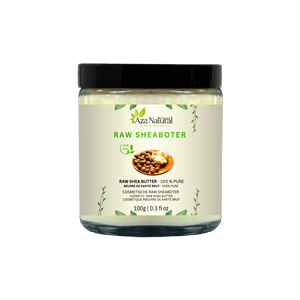
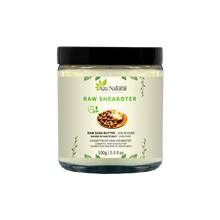
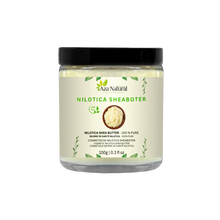
Anyone who knows shea butter already knows the fat of shea oil: it comes from the same kernel of the same tree, and the ingredient name on the butter is Butyrospermum Parkii Butter, on the oil Butyrospermum Parkii Oil. The difference is the form. Raw shea butter is the whole butter, solid and liquid parts together: firm at room temperature, spreadable in the hand, with the smoky, nutty smell of unrefined shea. Nilotica shea butter comes from the East African subspecies from Uganda and is softer and creamier. Shea oil is only the liquid part: thin enough for a pipette, quicker to spread over a large area of skin and easier in the hair.
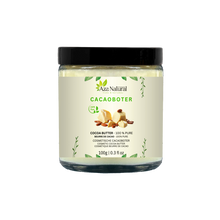
Anyone who wants a thick layer on heels or hands that stays put chooses the butter; anyone who wants the fat of shea without having to melt it chooses the oil. For a comparable pair in our shop, butter and liquid fat from the same bean, see cocoa oil.
Why the butter is solid and the oil liquid
A plant fat is a mixture, and which parts dominate decides whether it is solid or liquid at room temperature. Stearic acid is solid at room temperature; oleic acid is liquid. Shea butter has a lot of both, which is why it is firm yet melts on the skin. When the liquid part is separated from the solid part, you are left with a harder stearin fraction on one side and the olein, the liquid fraction, on the other: that is shea oil. How that separation was done for this oil is not on the label, and so we say nothing about it; the label says cold-pressed.
What you do notice: below about fifteen degrees shea oil can turn cloudy or thicker, because part of the fat sets after all, and in the hand or in a warm room it turns clear again. That is not spoilage.
How it looks, smells and feels
Clear, light yellow to golden yellow, and mild in smell: slightly nutty, the smell of shea itself, without added fragrance. It is fuller than a thin seed oil, stays on the skin for a moment and then absorbs. That is what makes it the oil for the body and for the dry places rather than for the face, where most people find it too rich; for the face there are lighter oils in the face oils collection.
On dry skin: body and hands
Apply shea oil to lightly damp skin, straight after showering: then it spreads most easily and feels least greasy. Use about half a teaspoon, 2.5 ml, per arm or lower leg, warm the oil between the palms and spread it with long strokes; it stays for a few minutes and then absorbs. For the hands two to three drops are enough; rub them in until they no longer shine. More oil does not give softer skin, only greasier skin. The first time, try a small patch and look at the skin the next day.
On elbows, knees and heels
Where the skin is thickest and driest, work shea oil in in the evening: two to three drops per elbow, knee or heel, rubbed in for a minute. For the heels you can put socks over it, so the oil gets the night and the bedding stays clean. If you want a thicker layer that stays longer, mix a few drops of shea oil with a little raw shea butter in the palm; the oil makes the butter spreadable without melting it. Other products for dry hands and heels are in the hands and heels collection.
On the hair and the cuticles
In dry or curly hair, shea oil goes on the ends and the lengths, not on the roots: one or two drops rubbed between the palms and passed through the dry ends. As a pre-wash treatment, spread a teaspoon over the lengths, leave it half an hour and wash as usual; thick or curly hair can take longer. On the cuticles, one drop per hand, spread over the nails and massaged in, preferably in the evening. If you want to add an essential oil, keep to at most two to three drops per tablespoon of shea oil. Other oils for the hair are in the hair oils collection.
How much you use and which bottle to choose
Body: once a day, half a teaspoon of about 2.5 ml per arm or lower leg, so forty times from a 100 ml bottle and twelve from 30 ml. Hands, elbows and heels: two to three drops per spot, about 0.15 ml, so two hundred times from 30 ml. Hair ends: one or two drops a time, which you hardly notice on the bottle; a teaspoon as pre-wash, so twenty times from 100 ml. Cuticles: one drop per hand. At daily use on hands and hair ends a 30 ml bottle lasts three to four months.
If you use shea oil only on hands, hair ends and cuticles, 30 ml is enough for months and the bottle is empty before the oil is old. If you use it on the whole body or in blends with shea butter, 30 ml is gone in a few weeks and 100 ml is cheaper per millilitre. Both bottles hold the same oil, in dark glass with a pipette. If the bottle stands in a cold room and the oil turns cloudy, put it in a warm room or in your hand for a quarter of an hour; it turns clear again.
How to store it
Cool, dark and tightly closed, preferably not in the bathroom, and finish an opened bottle within a year, because the label gives no shelf life. Cloudiness in the cold is normal; if the oil smells sharp or rancid instead of mild and nutty, do not use it any more.
What to watch out for
External use only: this is a cosmetic oil, so do not swallow it and do not use it in the kitchen, even though shea butter is also used as a cooking fat in West Africa; this bottle was not pressed or checked for that. Shea is called a nut in the trade; it is not on the European list of fourteen allergens, but anyone who reacts to nuts tests first and asks a doctor when in doubt, and that is not a promise. Apply one drop to the inside of the wrist first and wait a day. Avoid contact with the eyes and rinse with lukewarm water. Keep out of reach of children. Other single-ingredient oils are in the pure oils collection.
Frequently asked questions
Is shea oil the same as shea butter?
Same fat from the same kernel, different form: the butter is the whole fat, solid at room temperature; the oil is its liquid part, dosed with a pipette.
My shea oil has gone cloudy. Is it spoiled?
No. Below about fifteen degrees part of the fat sets. In the hand or a warm room it turns clear again.
Can I use it with a nut allergy?
Shea is not on the European list of fourteen, but it is called a nut; test first and ask a doctor when in doubt.
Is it suitable for the face?
Most people find it too rich for the face. It is the oil for the body, hands, heels and hair ends.