


In this article
Black seed oil is the cold-pressed plant oil from the seeds of black cumin, Nigella sativa, an annual plant of the buttercup family with finely divided leaves, pale blue to white flowers and a seed capsule full of small, angular, matt black seeds. On the label of our black seed oil the ingredient reads Nigella Sativa Seed Oil, cold-pressed and made in Morocco, as a cosmetic oil for hair and skin; there is no second ingredient. It is a dark amber to brown, medium-thick oil with a pungent, spicy smell, sold in a 30 ml and a 100 ml bottle with a pipette.
Many people search for 'black seed oil' or search for 'black cumin oil'. We make no claim about what this oil does in or under the skin, on the scalp, to the hair or anywhere else in the body: the label says nothing about that, and neither do we, not as a fact and not as a saying. What you can check yourself is what the label says, how the oil looks, smells and feels, and how to use it, in what amount. That is what this guide is about.
Black seed oil at a glance
- Label: Nigella Sativa Seed Oil, the only ingredient; cold-pressed; made in Morocco.
- Plant: black cumin, Nigella sativa, of the buttercup family; the oil comes from the black seeds.
- Other names: black cumin oil, nigella oil, kalonji oil, habba sawda oil; all the same oil.
- Colour and smell: dark amber to brown; spicy, sharp and peppery with a bitter note, and the smell lingers.
- Texture: medium-thick; absorbs in a few minutes and leaves a light film you feel for a while.
- Use: face, dry patches on the body, scalp, hair ends and a home-made blend; external use only.
- Certificate: none; the label carries none, so this page names none.
- Bottle and storage: 30 ml or 100 ml in dark glass with a pipette; cool, dark and closed, finish within twelve months.
Black cumin is not cumin
The name puts people on the wrong track. Black cumin, Nigella sativa, belongs to the buttercup family, the family of the buttercup and the columbine; ordinary cumin, Cuminum cyminum, belongs to the carrot family, with parsley and dill. The two plants are unrelated, and the seeds only look alike from a distance: cumin seed is brown and elongated, black seed is black and angular. The garden flower love-in-a-mist, Nigella damascena, is another species again; this oil does not come from it. In Arabic the seed is habba sawda, in Hindi kalonji, in German Schwarzkümmel, in French nigelle or cumin noir.
We sell the whole seeds separately as a kitchen spice, sanuz black seeds; this bottle is the cosmetic oil pressed from the same seeds, for skin and hair and not for the kitchen. Anyone who prefers the smell of black cumin in a soap finds it in the M'Gouna black cumin soap, a different product with its own label and a fragrance in it.
How the oil looks, smells and feels
Dark amber to brown, and medium-thick: thicker than jojoba oil, far thinner than castor oil. It absorbs in a few minutes and leaves a light film you feel for a while. What strikes you first is the smell: spicy and sharp, peppery, with a bitter note, exactly the smell of the seeds themselves, and it stays on the skin for some time after applying. Anyone opening black seed oil for the first time should know that; it is not an oil you do not smell. That smell is the single most important thing in choosing how and when to use it, and it is why most people use it in the evening or blend it with a milder oil.
On the face and the body
For the face, two to three drops are enough. Put them on lightly damp skin after cleansing and press them in with the flat of the hand; the oil is medium-thick and absorbs in a few minutes, leaving a light film. Because of the smell most people use it on the face in the evening, or mix one drop into a portion of a milder oil or of their day cream in the hand. On the body use it locally, on elbows, shins or hands: half a teaspoon, spread thinly on skin that is still damp after showering. The first time, use one drop along the jawline and look at the skin the next day. Other oils for the face are in the face oils collection.
On the scalp
This is the use most bottles are bought for. Spread half a teaspoon of black seed oil, about 2.5 ml, along the partings over the scalp with the fingertips or the pipette and massage for a few minutes; a full head of hair takes a whole teaspoon. Leave it for half an hour to an hour, under a towel or shower cap if you like, and wash it out with shampoo, twice if needed; most of the smell goes in the wash, but it can be faintly there for the first hours. Once a week is usual. If you want it milder, mix it with an equal amount of jojoba oil or another thin oil; it also spreads more easily that way.
On the hair ends
Between washes, one or two drops are enough: rubbed between the palms and passed through the ends of dry hair, not on the roots. Because the smell lingers, some people keep this use for the evening. More than two drops makes the ends greasy without any gain. Other pre-wash masks for the hair are in the hair masks collection.
Black seed oil, castor oil and jojoba oil: three oils for the scalp
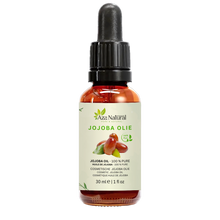
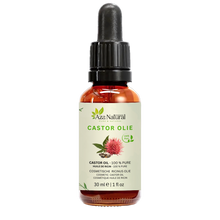
Anyone considering black seed oil for the scalp usually also looks at these two. Castor oil is thick and syrupy, nearly scentless, and stays on the skin for a long time; it is harder to spread and to wash out, which is why many people blend it. Jojoba oil is thin, nearly scentless and in fact a liquid wax that hardly ages and leaves no film; it is the oil for anyone who wants to smell nothing. Black seed oil sits between the two in thickness and is by far the strongest smelling of the three.
That makes the choice simple: for the spicy smell of black cumin, black seed oil neat; for the oil with a milder smell, one part black seed oil to three or four parts jojoba; for a thick oil that stays put, castor with a dash of black seed oil if you like.
In a home-made blend
In a blend, black seed oil sets the smell of the whole, even in a small share. Keep to one part black seed oil to three or four parts other oil or melted butter: the spicy smell is then recognisable without overpowering everything. Mix in a clean jar, keep it cool and dark and use it within a few months. Black seed oil ages like every plant oil: if the blend no longer smells spicy but sharp and rancid, throw it away. Other base oils are in the carrier oils collection.
How much you use and which bottle to choose
Face: two to three drops a time, once a day; three drops is about 0.15 ml, so a 30 ml bottle lasts two hundred applications, more than six months. Body: half a teaspoon of about 2.5 ml per dry patch, so forty times from 100 ml. Scalp: half a teaspoon a time, once a week, so forty times from 100 ml or twelve from 30 ml; a whole teaspoon for a lot of hair gives twenty from 100 ml. Hair ends: one or two drops, so hundreds of times from one bottle. More oil does not give a better result, only hair that feels greasy and a smell that lingers longer.
If you use black seed oil on the face or the hair ends, or want to find out first whether you like the smell, choose 30 ml: at daily use on the face it lasts more than six months, and you do not buy 100 ml of an oil you may find too strong. If you use it weekly on the scalp or in blends, 100 ml is cheaper per millilitre and still gone within a year. Both bottles hold the same oil, in dark glass with a pipette. Anyone who does not know black seed oil yet starts with 30 ml.
How to store it
Cool, dark and tightly closed, and finish an opened bottle within twelve months; the label gives no shelf life. If the oil no longer smells spicy and peppery but sharp and rancid, do not use it any more.
What to watch out for
External use only: this is a cosmetic oil, so do not swallow it and do not use it in the kitchen. There is also black seed oil sold as a food or as a food supplement; that is a different product, pressed, bottled and checked differently, and this bottle is not it. Apply one drop to the inside of the wrist first and wait a day; the oil is pronounced, and anyone who finds it too strong on the face blends it with a milder oil. Avoid contact with the eyes and rinse with lukewarm water. The label names no fragrance, but an analysis certificate of this batch we do not have. Keep out of reach of children.
Frequently asked questions
Is black seed oil the same as black cumin oil and nigella oil?
Yes. They are names for one oil: the cold-pressed oil from the seeds of Nigella sativa.
Can I swallow this black seed oil?
No. This is a cosmetic oil for hair and skin, as the label says. Oil sold as a food is a different product.
Why does it smell so strong?
Because it is pressed from the seeds and nothing has been added or taken away. The smell is that of the seeds themselves, and it lingers; blend it if you want it milder.
Which bottle should I start with?
30 ml, until you know whether you like the smell.

