
In this article
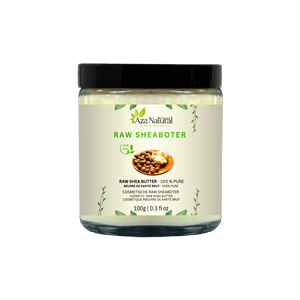
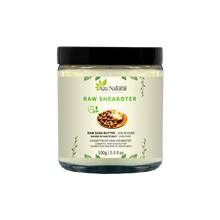
Raw shea butter is the unrefined fat from the nuts of the shea tree, Vitellaria paradoxa, a tree of the savannah belt of West and Central Africa, from Senegal to Uganda. On the label of our raw shea butter the ingredient reads Butyrospermum Parkii Butter, the older botanical name that labels still use. Raw means unrefined: the butter has not been bleached and not been deodorised, so it keeps its own colour and smell. It comes in a jar of 100, 250 or 500 grams. In Dutch the product is called raw sheaboter, which is why that spelling appears in the address of this page.
Many people search for 'raw sheaboter' or search for 'raw shea butter benefits'. We make no claim about what this butter does in or under the skin, on the scalp, to the hair or to muscles and joints: the label says nothing about that, and neither do we. What you can check yourself is what the label says, how to recognise an unrefined butter, how it behaves and how to use it, in what amount. That is what this guide is about.
Raw shea butter at a glance
- Label: Butyrospermum Parkii Butter; the fat from the nuts of the shea tree and nothing else.
- Tree: Vitellaria paradoxa, which grows wild in the Sahel and is not planted; it bears fruit only after fifteen to twenty years.
- Raw: not bleached, not deodorised; the butter keeps its own colour and smell.
- Colour and smell: off-white to light yellow, varying a little per batch; a light, nutty, slightly smoky smell.
- Texture: firm and creamy at room temperature; melts to an oily layer as soon as it touches the skin.
- Use: dry patches such as lips, hands, elbows, knees and heels; whipped body butter; hair lengths and ends; external use only.
- Nut product: anyone who reacts to nuts does a patch test first or leaves it.
- Jar and storage: 100, 250 or 500 grams; cool, out of the sun and closed.
The tree and the nut
The shea tree grows wild across the savannah south of the Sahara, is not planted, and bears fruit only after fifteen to twenty years; the fruit is gathered, traditionally by women. A shea fruit has green, sweet flesh around a nut, and inside that nut sits the kernel from which the butter is made: the kernels are dried, crushed, roasted lightly, ground and kneaded with water until the fat separates. That is why the label says Butter and not Oil, and why the product is a nut product. The same fat, split into its liquid part, is sold as shea oil; the East African subspecies from Uganda gives the softer Nilotica shea butter.
How to recognise unrefined shea butter
By the colour: off-white to light yellow. Pure white or bright yellow it should not be; white points to bleaching, bright yellow to colouring or additions. The exact shade differs a little from batch to batch, because the nuts come from different regions and are processed in different ways, and a jar that is a shade lighter or darker than the last one is not a different product. By the smell: raw shea butter smells lightly nutty and a little smoky, the smell of the roasted kernel; refined shea butter smells of nothing. And by the texture: firm and creamy in the jar, melting between the fingers.
How it behaves at room temperature and on the skin
At room temperature shea butter is solid and creamy, firmer than a cream and softer than cocoa butter. As soon as it touches the skin it melts to an oily layer that stays for a while and then absorbs; on the skin it feels rich, which is why it is used on the small dry places rather than all over. That behaviour is also why it is such a common ingredient in body butters, lip balms and balms: it gives them body at room temperature and melts on contact. In a warm room or a warm car it goes soft and may melt entirely; that is not spoilage, see below on grainy butter.
On dry patches
Rub a small piece of butter between the hands until it melts and apply it to the dry places: lips, hands, elbows, knees, heels. An almond-sized amount is already enough for a large area; more stays on top of the skin as a greasy layer. For the heels, apply it in the evening and put on socks, so the butter gets the night and the bedding stays clean. On the face most people find it too rich, except on the lips and on a very dry patch; for the face there are lighter oils in the face oils collection. The first time, try a small patch and look at the skin the next day.
In a whipped body butter
Melt the shea butter in a bain-marie, not in a microwave and not on a direct flame, and stir in an oil, such as coconut, sweet almond or jojoba, in a ratio you like; three parts butter to one part oil is a common start. Let the mixture cool until it begins to set, then whip it with a whisk or a hand mixer until it is light and airy. You get a butter that spreads more easily than the pure butter and takes less time to absorb. Store it in a clean jar, cool and out of the sun, and use it within a few months. A blend of only fats needs no preservative; anything with water in it does. Ingredients for your own blends are in the DIY collection.
On the hair
A little melted butter through the lengths and the ends of dry or damp hair, especially curly hair: rub a pea-sized amount between the palms until it is liquid and smooth it over the lower half of the hair. Not on the scalp; shea butter is heavy and rinses out of it with difficulty. As a mask before washing, a hazelnut-sized amount through the lengths, left for half an hour under a towel and washed out with shampoo, twice if needed. For hair that needs something lighter, shea oil or an oil from the hair oils collection is easier.
Why shea butter sometimes turns grainy
Shea butter is a mixture of fats that set at different temperatures. If the butter melts and then sets again slowly, in a warm car, on a sunny windowsill or in a bathroom that heats up, the fats set at different moments and the butter turns grainy: small hard grains in a softer mass. That is not spoilage, and the butter is not spoiled; the grains melt on the skin like the rest. If you want the creamy texture back, melt the butter fully in a bain-marie, then cool it fast in the fridge and stir it once as it sets. Keep the jar cool and out of the sun and it stays creamy.
How much you use and which jar to choose
An almond-sized piece is about two grams. For hands, lips and heels once a day, 100 grams lasts about two months. For a whipped body butter you use 100 to 150 grams of shea per batch, and then 250 or 500 grams is the size that fits. For hair ends only, 100 grams lasts far longer than a season. All three jars hold the same butter. Anyone who does not know shea butter yet starts with 100 grams.
How to store it
Cool, dark and with the lid tightly closed, out of the sun; not on a windowsill and preferably not in a warm bathroom, so it stays creamy instead of grainy. Unopened and kept cool it keeps a long time. If it smells sharp, sour or rancid instead of nutty, do not use it any more.
What to watch out for
External use only: this is a cosmetic butter, so do not swallow it and do not use it in the kitchen, even though shea butter is used as a cooking fat in West Africa; this jar was not made or checked for that. Shea is a nut product; anyone who reacts to nuts does a patch test in the crook of the elbow first and waits a day, or leaves it, and asks a doctor when in doubt. Avoid contact with the eyes. Keep out of reach of children. Other butters are in the natural butters collection, and the shorter guide Shea Butter for All Skin Types covers how to use it on dry, oily and sensitive skin.
Frequently asked questions
What does raw mean here?
Unrefined: not bleached and not deodorised. The butter keeps its own off-white to light yellow colour and its nutty smell.
Is shea butter the same as shea oil?
Same fat, different form. The butter is the whole fat, solid at room temperature; the oil is its liquid part, dosed with a pipette.
Can I use it with a nut allergy?
Better not, or only after a patch test and a word with a doctor. Shea comes from a nut.
My butter has gone grainy. Is it spoiled?
No. It melted and set again slowly. Melt it fully, cool it fast and stir it once, and it is creamy again.