
In dit artikel
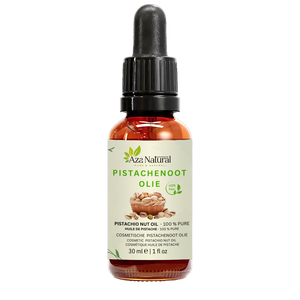
Pistachio oil is the cold-pressed plant oil from the kernel of the pistachio, Pistacia vera, the fruit of the pistachio tree. On the label of our pistachio oil the ingredient reads Pistacia Vera (Pistachio) Seed Oil, cold-pressed and made in India, as a cosmetic oil for hair and skin; there is no second ingredient. It is a green, medium-thick oil that smells recognisably of pistachio, sold in a 30 ml and a 100 ml bottle with a pipette.
Many people search for 'pistachio oil benefits' or search for 'pistachio oil for skin'. We make no claim about what this oil does in or under the skin or to the hair: the label says nothing about that, and neither do we. What you can check yourself is what the label says, that the oil is green and smells of pistachio, why it costs what it costs, who should leave it alone, and how to use it, in what amount. That is what this guide is about.
Pistachio oil at a glance
- Label: Pistacia Vera (Pistachio) Seed Oil, the only ingredient; cold-pressed; made in India.
- Plant: the pistachio, Pistacia vera; the oil comes from the green kernel, not from the shell.
- Colour and smell: green, from olive to deep emerald; nutty, recognisably pistachio.
- Texture: medium-thick; absorbs fairly quickly and leaves a slight sheen.
- Allergen: pistachio is a nut on the European list of fourteen allergens; anyone who reacts to nuts does not use this oil without asking a doctor.
- Price: one of the most expensive oils in the shop, because the kernel is dear and gives little oil; 30 ml is the usual size.
- Use: face, hair ends, cuticles and a home-made blend, drop by drop; external use only.
- Bottle and storage: 30 ml or 100 ml with pipette; cool, dark and closed, finish within a year.
Why the oil is green and smells of pistachio
The kernel of a pistachio is green under its brown skin, and an oil pressed from it is green too, from olive to deep emerald depending on the batch; nothing is added, and why the kernel is green is not on the label, so we leave it there. On the skin the colour is invisible in the two or three drops you use, but a spill on a white towel shows. The smell is the smell of the nut, nutty and recognisably pistachio, and it fades once the oil has absorbed. Together with hemp seed oil and pumpkin seed oil it is one of the few green oils in the shop.
Why it costs what it costs
Pistachio kernels are expensive to begin with, and they give little oil when pressed; a great many kernels go into one small bottle. That is the whole reason this oil is among the dearest in the shop, and the reason it is bought in 30 ml, used drop by drop on the face, and stretched in blends rather than poured over the body. An oil that costs this much is not the oil for a massage.
Who should not use it
Pistachio is a nut on the European list of fourteen allergens. Anyone who reacts to pistachio or to other nuts does not use this oil without asking a doctor, and whether the pressed oil contains traces of the nut protein we cannot say without an analysis certificate. The same caution applies to anyone who reacts to cashew or mango, because the pistachio tree is related to both. For everyone else: one drop on the inside of the wrist first, and wait a day.
On the face
This is the use most bottles are bought for. Two to three drops on lightly damp skin after cleansing, spread well with the fingertips or pressed in with the flat of the hand. The oil is medium-thick and leaves a slight sheen for a while, so most people use it in the evening. Three drops is about 0.15 ml, so a 30 ml bottle lasts two hundred evenings, more than six months.
On the hair ends
One drop rubbed between the palms and smoothed over the ends of dry hair, not on the roots. The oil is too expensive and too rich to use over the whole head; one drop on the ends is where it makes sense. On very light hair, test on a strand first, because the oil is green.
On the cuticles
One drop per hand in the evening, massaged into the cuticles and the skin around the nails. The medium-thick oil stays where you put it for a moment, which is exactly what you want here. One drop per hand is about 0.1 ml, so three hundred evenings from 30 ml.
In a home-made face oil or serum
One part pistachio oil to ten to twenty parts of another oil, as the ingredient that brings the colour and the smell of pistachio: a few drops in a 30 ml bottle of jojoba oil or sweet almond oil is enough to turn the blend faintly green and give it the scent. Mix in a clean dark glass bottle, label it, and finish it within a few months. Other oils to blend with are in the carrier oils collection.
How much you use and which bottle to choose
For nearly everyone, 30 ml: two to three drops a day on the face is more than six months, one drop per hand on the cuticles is a year, and the bottle is empty before the oil is old. 100 ml is for the person who blends a lot and knows the oil already; it is cheaper per millilitre but takes longer to finish, and this is not an oil to let sit. Both bottles hold the same oil, in dark glass with a pipette.
How to store it
Cool, dark and tightly closed, not in the bathroom or on a windowsill, and finish an opened bottle within a year; the label gives no shelf life and we give none either. If the oil smells sharp or rancid instead of nutty, do not use it any more.
What to watch out for
External use only: this is a cosmetic oil, so do not swallow it and do not use it in the kitchen. Pistachio oil also exists as a food; that is a different product, pressed, bottled and checked as food, and this bottle is not. Pistachio is a nut on the allergen list; see above. Apply one drop to the inside of the wrist first and wait a day. Avoid contact with the eyes and rinse with lukewarm water. Keep out of reach of children. Other single-ingredient oils are in the pure oils collection.
Frequently asked questions
Is pistachio oil safe for someone with a nut allergy?
Pistachio is a nut on the European allergen list. Anyone who reacts to nuts, cashew or mango does not use this oil without asking a doctor.
Why is it green?
Because the kernel is green. Nothing is added; in two or three drops on the skin the colour is invisible.
Why is it so expensive?
The kernels are dear and give little oil. That is why it is used drop by drop and sold mainly in 30 ml.
Can I use it on the whole body?
You can, but it is a waste of an expensive oil; use a cheaper oil for the body and keep this one for the face, the ends and the cuticles.