
In this article
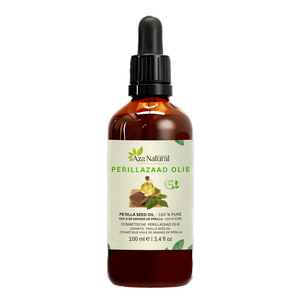
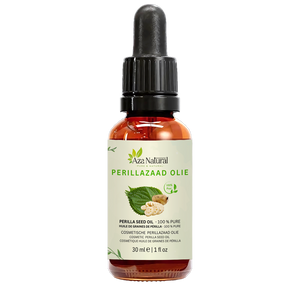
Perilla seed oil is the plant oil from the seeds of Perilla frutescens, an annual herb of the mint family from East Asia, known in Japan as shiso and in Korea as kkaennip. On the label of our perilla seed oil the ingredient reads Perilla frutescens Seed Oil, and there is no second ingredient. It is a light yellow to golden yellow, thin oil that absorbs fast, sold in a 30 ml and a 100 ml bottle with a pipette, as a cosmetic oil for skin and hair.
Many people search for 'perilla seed oil benefits' or search for 'perilla oil for skin'. We make no claim about what this oil does in or under the skin, on the scalp, to the hair or anywhere else in the body: the label says nothing about that, and neither do we. What you can check yourself is what the label says, how the oil feels and smells, why it ages faster than most oils, and how to use it, in what amount. That is what this guide is about.
Perilla seed oil at a glance
- Label: Perilla frutescens Seed Oil, the only ingredient.
- Plant: Perilla frutescens, the shiso plant, an annual of the mint family from East Asia; the oil comes from the small seeds, not from the leaf.
- Colour and smell: light yellow to golden yellow; faint and slightly herbal when fresh.
- Texture: thin; absorbs fast and leaves little shine, so it works under a cream.
- Keeping: a highly unsaturated seed oil, like linseed oil, and one of the most perishable oils in the shop; cool, dark, closed, and used up.
- Use: face, a small share of a home-made serum or face oil, hair ends and a hair mask; external use only.
- Not a kitchen oil: perilla oil for the table is a different product; this bottle is cosmetic.
- Bottle: 30 ml or 100 ml in dark glass with a pipette.
The plant and the seed
Perilla is a leafy annual of the mint family with broad, serrated, green or purple leaves; the leaf is the shiso of the Japanese kitchen and the kkaennip of the Korean kitchen, and the plant is grown across East Asia. After flowering it sets tiny round seeds, and from those seeds the oil is pressed, which is why the label says Seed Oil. The leaf and the seed are different things: the leaf is a herb, the seed gives an oil, and the oil does not smell of the leaf. The label names the plant and nothing else: no country, no shelf life, no content of anything, and so we name none of those either.
How the oil feels and smells
Light yellow to golden yellow and clear, thin, and quick to absorb: two or three drops spread over a lightly damp face are gone in a few minutes and leave little shine, which is why it can go under a cream. Fresh, it smells faint and slightly herbal, a little green; that smell fades on the skin. The smell is also your gauge for freshness, see below.
Why it ages fast, and why that decides how you buy and keep it
Plant oils differ in how unsaturated their fats are, and the more unsaturated, the thinner the oil feels and the faster it reacts with oxygen, warmth and light. Perilla seed oil belongs, with linseed oil, to the most unsaturated seed oils there are. That gives it its light feel, and it also makes it one of the most perishable oils in our range: a bottle left open in a warm bathroom starts to smell sharp, like old paint or old fat, within months. So buy the small bottle unless you use a lot, keep it cool and dark with the cap tight, and use it up. The fridge is a good place; the oil stays thin there. How much of which fat is in it, the label does not say, and so we say nothing about that.
On the face
Two or three drops, spread over lightly damp skin after cleansing; on damp skin the oil spreads more easily and you need less of it. The oil is thin and absorbs fast, leaves little shine and so works under a cream as well as on its own in the evening. Once a day is enough for most people. The first time, apply one drop in the crook of the elbow, wait a day, and then start with one drop on the jawline. Other light oils for the face are in the face oils collection.
In a home-made serum or face oil
In your own blend, keep perilla seed oil to a small share of the oil phase: one part perilla to three to ten parts of a longer-keeping oil. More is not advisable, because the more highly unsaturated oil a blend contains, the sooner the whole blend goes off. A good base is jojoba oil, a liquid wax that hardly ages: one part perilla to four parts jojoba is a light face oil that keeps for a few months. Mix in a clean dark bottle of 30 ml, label it with the date, keep it cool and finish it within three months. Other base oils are in the carrier oils collection.
On the hair ends and as a hair mask
A few drops through the ends of dry hair, rubbed between the palms first and kept away from the roots. As a mask, a larger amount through the lengths, a teaspoon to a tablespoon depending on the length; leave it half an hour to an hour and wash it out with a mild shampoo. Because the oil is thin, one wash is usually enough. For a mask a cheaper and longer-keeping oil does the same job; perilla is the oil for the face first of all. Other oils for the hair are in the hair oils collection.
Perilla seed oil next to linseed oil
The two are alike: both are thin, highly unsaturated seed oils that age fast and are kept cool. Perilla has a slightly lighter, more herbal smell; linseed is nearly neutral and a little fuller. Anyone who wants the lighter of the two on the face picks perilla; anyone who wants the cheaper of the two for a hair mask picks linseed. Both are cosmetic oils in our shop and neither is for the kitchen.
How much you use and which bottle to choose
Face: two to three drops a time, once a day; three drops is about 0.15 ml, so a 30 ml bottle lasts two hundred applications, more than six months. A blend: a teaspoon of 5 ml per 30 ml bottle of face oil. Hair ends: a few drops, which you hardly notice on the bottle; a mask a teaspoon to a tablespoon. For an oil that ages this fast, 30 ml is the bottle for almost everyone: it is empty before the oil is old. Choose 100 ml only if you make blends or masks regularly, and keep it in the fridge. Both bottles hold the same oil.
How to tell when it is old
By the smell. A fresh perilla seed oil smells faint and slightly herbal; an old one smells sharp, like old paint or old fat. If you smell that, do not use it on the skin any more. Cloudiness in the fridge is not a sign of age; the oil clears again at room temperature.
What to watch out for
External use only: this is a cosmetic oil, so do not swallow it and do not use it in the kitchen. Perilla oil for the table exists in East Asia and is pressed from the same seed, but that is a different product, made, bottled and checked as a food, and this bottle is not it. Test in the crook of the elbow first and wait a day. Avoid contact with the eyes and rinse with lukewarm water. The label names one ingredient and no fragrance; an analysis certificate of this batch we do not have. Keep out of reach of children. Other single-ingredient oils are in the pure oils collection.
Frequently asked questions
Is perilla seed oil the same as shiso oil?
Shiso is the Japanese name of the plant, so shiso seed oil is the same oil. Shiso leaf and its extracts are something else.
Why does it go off so fast?
Because it is one of the most highly unsaturated seed oils. Keep it cool, dark and closed, buy the small bottle and use it up.
Can I use it in the kitchen?
No. This is a cosmetic oil; perilla oil for the table is a different product.
Can I use it under a cream?
Yes. It is thin, absorbs fast and leaves little shine.