
In this article
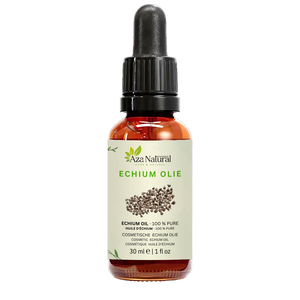
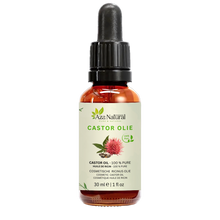
Echium oil is the cold-pressed plant oil from the seed of Echium plantagineum, purple viper's bugloss, a plant of the borage family with rough, hairy leaves and purple-blue flowers. On the label of our echium oil the ingredient reads Echium Plantagineum Seed Oil, cold-pressed and made in the United States, as a cosmetic oil for hair and skin; there is no second ingredient. It is a light yellow, thin oil, sold in a 30 ml and a 100 ml bottle with a pipette, and it is one of the more expensive oils in the shop.
Many people search for 'echium oil benefits' or search for 'echium oil vs fish oil'. We make no claim about what this oil does in or under the skin, on the scalp, to the hair or anywhere else in the body: the label says nothing about that, and neither do we. It is a cosmetic oil, not a food supplement, so the comparison with fish oil does not apply to this bottle. What you can check yourself is what the label says, what makes the oil unusual, how it feels, and how to use it, in what amount. That is what this guide is about.
Echium oil at a glance
- Label: Echium Plantagineum Seed Oil, the only ingredient; cold-pressed; made in the United States.
- Plant: purple viper's bugloss, Echium plantagineum, of the borage family; the oil comes from the seed.
- Colour and smell: light yellow to golden yellow; mild and plant-like, gone quickly on the skin.
- Texture: thin and light; absorbs fast without a greasy layer.
- What makes it unusual: it contains stearidonic acid and gamma-linolenic acid, which few seed oils do; the label gives no amounts, and neither do we.
- Keeping: a highly unsaturated oil, so it ages faster than most; cool and dark, the fridge is fine, finish within twelve months.
- Use: face, scalp, hair ends, a home-made face oil; external use only, not to be swallowed.
- Bottle: 30 ml or 100 ml in dark glass with a pipette.
The plant and the seed
Echium plantagineum comes from the Mediterranean and western Europe and is grown on fields for its seed oil; in Australia, where it escaped, it is a weed known as Paterson's curse. It is a relative of borage and comfrey, the rough-leaved plants, and like borage it is an annual or biennial with hairy leaves and blue to purple flowers. The small seeds are pressed for the oil, which is why the label says Seed Oil. This oil is cold-pressed and made in the United States, as the label says. In English the oil is echium oil, in French huile d'échium, in German Echiumöl or Natternkopföl.
What makes echium oil unusual
Plant oils differ mainly in the fats they are made of. Oils with a lot of oleic acid, such as olive and argan oil, feel fuller and keep long; oils with a lot of polyunsaturated fat are thinner, absorb faster and react more readily with oxygen, warmth and light. Echium oil belongs to that second group, and within it it is unusual: next to the fats most seed oils have, it contains gamma-linolenic acid, like evening primrose and borage oil, and stearidonic acid, which is missing from most seed oils and is otherwise found mainly in blackcurrant seed and hemp seed oil. That combination is the reason people look for echium oil.
What those fats do on or in the skin is not on the label and we do not promise it. The label also gives no amounts and we have no analysis of this batch; so there is no table and no figure on this page.
How the oil feels and smells
Light yellow to golden yellow and clear, thin and light; it absorbs fast and leaves no greasy layer. The smell is mild and plant-like and is gone from the skin within a minute. In the fridge it becomes a little thicker and is thin again after a few minutes at room temperature. If it smells sharp, sour or of old paint instead of mild, it has aged, see below.
On the face
Cleanse the face and leave the skin lightly damp. Put two to three drops of echium oil in the palm, rub the hands together briefly and press the oil onto cheeks, forehead, nose and chin with the flat of the hand; pressing spreads a small amount better than rubbing. Use it in the evening as the last step, or in the morning under a day cream; it absorbs within a few minutes and does not shine. You can also mix the drops into a portion of cream in the palm. More than three drops has no point: what the skin does not take up stays on top of it. Do the wrist test first. Other light oils for the face are in the face oils collection.
On the scalp and the hair ends
Scalp: spread half a teaspoon of echium oil, about 2.5 ml, over the scalp with the fingertips and massage it in briefly; leave it twenty to thirty minutes and wash it out with a mild shampoo, twice if needed. At most once a week. Hair ends: one or two drops rubbed out in the palms and spread over the ends of towel-dried hair, not on the roots; thick or curly hair takes three drops. The label names hair and skin as the use. For a mask over all the lengths echium oil is too costly and too thin; take a fuller oil such as jojoba oil or coconut oil for that. Other oils for the hair are in the hair oils collection.
Blending your own face oil with echium oil
Echium oil is one of the more expensive oils in our shop and you need little of it, which is why many people blend it. Two blends that work: one part echium oil to one part rosehip oil, for anyone who wants to combine two light seed oils, or one part echium oil to three parts jojoba oil, for a neutral face oil that keeps longer, because jojoba is a liquid wax that hardly turns rancid. Mix in a dark glass bottle of 30 ml, shake before use and finish the blend within three months; two oils with a lot of polyunsaturated fat do not become more durable together. Add no essential oil to a face oil you use around the eyes.
Echium oil, evening primrose oil and borage oil
All three are bought for the same reason, gamma-linolenic acid, and all three are light seed oils that absorb fast; we sell all three pure and cold-pressed. Evening primrose oil is the best known of the three and the mildest in smell. Borage oil comes from the same plant family as echium. Echium oil is the only one of the three with stearidonic acid as well; in use it is the thinnest and absorbs fastest. Anyone who wants the familiar route picks evening primrose or borage; anyone who wants the broader pattern picks this one. All three are kept cool and dark.
How much you use and which bottle to choose
Face: once or twice a day, two to three drops a time. Three drops is about 0.15 ml, so at once a day a 30 ml bottle lasts more than six months and at twice a day more than three. Scalp: half a teaspoon a time, once a week, so about twelve applications from 30 ml and forty from 100 ml. Hair ends: one or two drops a time, a few times a week. For the face and the hair ends, 30 ml is the right size: the bottle is empty before the oil is old, and with an oil this unsaturated that is an advantage. Choose 100 ml if you also use it on the scalp, share it with others in the house or blend it with jojoba or rosehip oil. Both bottles hold the same oil.
How to store it
Cool, dark and tightly closed, not in the bathroom and not in the sun; with this oil that counts more than with almost any other, because polyunsaturated fat reacts readily with oxygen, warmth and light. The fridge is a good place; the oil gets a little thicker there and is thin again after a few minutes at room temperature. Finish an opened bottle within twelve months. If it smells sharp, sour or of old paint instead of mild and plant-like, do not use it any more.
What to watch out for
External use only: this is a cosmetic oil, not pressed or packed as a food or a supplement, so do not swallow it; the daily doses you find online for echium oil capsules have nothing to do with this bottle. Apply one drop to the inside of the wrist first and wait a day. Avoid contact with the eyes and rinse with lukewarm water. The label names one ingredient and no fragrance, preservative or other addition; an analysis certificate of this batch we do not have. Keep out of reach of children. Other single-ingredient oils are in the pure oils collection.
Frequently asked questions
Is echium oil a replacement for fish oil?
Not this bottle. This is a cosmetic oil for skin and hair; it is not a food or a supplement, and we say nothing about swallowing it.
Why does it need the fridge?
Because it is a highly unsaturated oil that reacts readily with oxygen, warmth and light. Cool and dark is the minimum; the fridge is better.
What is stearidonic acid, and why is there no figure?
A fat that few seed oils contain and echium oil does. The label gives no amount and we have no analysis, so there is no figure.
Which bottle should I start with?
30 ml. Used by the drop on the face, it lasts more than six months.