
In diesem Artikel
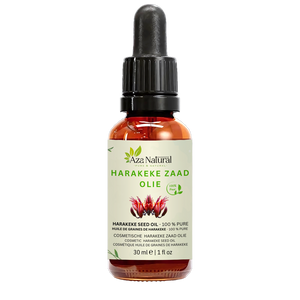
Harakeke seed oil is the cold-pressed plant oil from the seed of the New Zealand flax plant, Phormium tenax. Harakeke is the Māori name of that plant; in English it is called New Zealand flax. Most people know harakeke for its long leaves, which Māori weavers have used for centuries for cloth, baskets and rope. The seed is a different part of the plant, and the oil pressed from it is a relative newcomer in cosmetics. On the label the ingredient reads Phormium Tenax (Harakeke) Seed Oil, and there is no second ingredient.
Many people arrive here after searching for 'harakeke seed oil benefits'. This page keeps to what can be checked: what is on the label, what the plant is, how the oil looks, smells and feels, and how to use it. About what the oil does in or under the skin we make no claim. The label states no figures for any component and there is no analysis of this batch, so this text contains none.
Harakeke seed oil in brief
- Ingredient: Phormium Tenax (Harakeke) Seed Oil, exactly as printed on the label, and the only ingredient.
- Plant: New Zealand flax, Phormium tenax; the oil comes from the small, flat, black seeds, not from the leaves.
- Colour and scent: pale yellow, with a faint plant-like scent that fades within a few minutes.
- Texture: thin; it is taken up quickly and leaves no greasy film, which is why it also goes under a cream or make-up.
- Use: a light facial oil, a base for a serum of your own, a hair mask for scalp and lengths, and a single drop on dry ends; external use only.
- Sizes: 30 ml and 100 ml, singly or in packs of three or six.
- Storage: cool, dark and closed, preferably in the original packaging.
What is harakeke?
Harakeke is the Māori name for New Zealand flax. It is not botanically a flax at all; it is a large evergreen plant with long, strap-shaped leaves, native to New Zealand. After flowering it forms upright seed pods full of small, flat, black seeds, and those seeds are what the oil comes from. The English name New Zealand flax is a colonial nickname based on how the leaves were used, not on botany.
Is harakeke seed oil the same as linseed oil?
No. Linseed oil, also called flaxseed oil, comes from Linum usitatissimum, a completely different plant that grows in Europe and elsewhere and is pressed for both the kitchen and the paint shop. Harakeke seed oil comes from Phormium tenax, is sold as a cosmetic oil, and is not meant for the kitchen. The two share a common name and nothing else.
How is the oil made?
The pods are collected, the seeds separated, and the oil pressed cold. Cold pressing means no heat and no solvents, which keeps the oil closer to what was in the seed. Yields are modest and harakeke is not grown on a large scale for its oil, which is why the oil costs more than the common seed oils.
What does harakeke seed oil look, smell and feel like?
The oil is thin and pale yellow. It is taken up quickly and leaves no greasy film, and that is the reason it can be used under a cream or under make-up. The scent is weak and faintly plant-like and disappears within a few minutes. People with combination or oily skin often get on with it better than with a rich nut oil, simply because so little of it stays on the surface. If your skin feels tight an hour later, you used too little rather than too much; if it looks shiny, use one drop less next time.
What do people use harakeke seed oil for?
- As a light facial oil. Two or three drops on cleansed, slightly damp skin, also under a cream or make-up.
- As a base for a serum or facial oil of your own. The oil is light in structure and takes an essential oil well.
- As a hair mask. A few drops massaged into the scalp and spread over the lengths, left for twenty to thirty minutes and washed out.
- As a finish on dry ends. A single drop on dry hair.
How do you use it on the face?
Two or three drops, warmed between the palms and pressed onto the skin rather than smeared. The oil is light, so you need little of it. On slightly damp skin it spreads more easily: cleanse, pat dry, leave the skin a little moist and press the oil onto cheeks, forehead, nose and chin. If you use a cream as well, the oil goes on first and the cream over it, or you stir a drop into the portion of cream in your hand. Under make-up, wait a few minutes before foundation. Three drops is about 0.15 ml, so a 30 ml bottle used once a day on the face lasts about two hundred applications.
How do you use it in hair?
Massage a few drops into the scalp and spread the rest over the lengths. Leave it for twenty to thirty minutes and wash it out with a mild shampoo. On dry hair, a single drop can be used as a finish on the ends: rub it between the palms and draw the hands through the last few centimetres, away from the roots. The oil is light enough not to weigh fine hair down. For hair that wants a heavy mask, a thicker oil such as batana oil is the better choice; harakeke seed oil is the light option.
How do you use it in a blend of your own?
Because it is light in structure, harakeke seed oil is a pleasant base for a serum. If you add an essential oil to a product that stays on the skin, keep to no more than two drops per tablespoon of base oil; that is roughly one in a hundred. Mix in a small dark glass bottle, shake briefly before each use and finish the blend within a few months. To give a heavier oil more slip, mix one part harakeke seed oil with one part of the heavier oil and adjust from there. Do not add water to an oil blend.
How should harakeke seed oil be stored?
Cool, dark and closed, preferably in the original packaging: light and warmth make any cold-pressed oil turn faster. Keep the bottle out of the sun and out of a steamy bathroom, and buy a size you will actually finish. If the oil smells sharp or old instead of faintly plant-like, throw it away.
What to keep in mind
Harakeke seed oil is for external use only; it is a cosmetic oil and not meant to be swallowed. Before the first use, put a drop on the inside of your wrist or in the crease of your elbow and wait a day. Avoid contact with the eyes and rinse with lukewarm water if it happens. Keep out of reach of children.
Which bottle: 30 ml or 100 ml?
For the face or the hair ends alone, 30 ml lasts for months. For a weekly hair mask or for blending, 100 ml is cheaper per millilitre. Both bottles hold the same oil and can be ordered singly or in packs of three or six.
Where does Aza Natural's harakeke seed oil come from?
We sell harakeke seed oil pure and cold-pressed, without added fragrance or other ingredients. Other single-ingredient oils are in the pure oils section; two other light seed oils for the face are kiwi seed oil and goji berry seed oil.