
Dans cet article
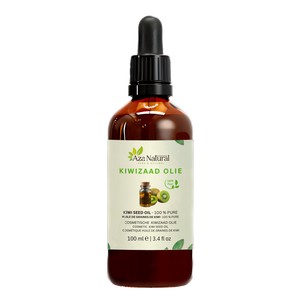
Kiwi seed oil is the cold-pressed plant oil from the small black seeds of the kiwi fruit, Actinidia chinensis. The kiwi is a climbing plant that comes from China; its cultivation on a large scale began in New Zealand. Inside the green flesh sit hundreds of tiny seeds in a ring around the white core, and those seeds are what the oil is pressed from. On the label the ingredient reads Actinidia Chinensis Seed Oil, cold-pressed and made in India, as a cosmetic oil for skin and hair. There is no second ingredient.
Many people arrive here after searching for 'kiwi seed oil benefits' or 'kiwi oil for skin'. This article is about something narrower and more useful: what the oil is, what the label says, how it feels, and how to use it. About what the oil does in or under the skin we make no claim. The label states no figures for any component and there is no analysis of this batch, so this text contains none either.
Kiwi seed oil in brief
- Ingredient: Actinidia Chinensis Seed Oil, exactly as printed on the label, and the only ingredient.
- Plant: the kiwi, Actinidia chinensis; the oil comes from the small black seeds, not from the flesh or the skin.
- Method and origin: cold-pressed and made in India, as the label states; where the seeds were harvested the label does not say.
- Colour and scent: golden yellow, with a faint green, slightly fruity scent that fades within a few minutes.
- Texture: thin; it sinks in quickly and leaves little shine.
- Use: the face, the eye contour, a lip balm or serum of your own making, and dry hair ends; external use only.
- Sizes: 30 ml and 100 ml in dark glass with a pipette, singly or in packs of three or six.
- Storage: cool, dark and closed; use an opened bottle within a year.
Why is kiwi seed oil expensive?
Because of the yield. One kiwi holds hundreds of seeds, but each seed weighs about a milligram, and the seeds only become available when fruit is processed into juice, puree or dried slices. A great many seeds from a processing plant go into one small bottle. That is the usual explanation for the price, and it is also why 30 ml is the sensible size for most people. It is not a rare plant; it is a low-yield seed.
What does kiwi seed oil look, smell and feel like?
The oil is golden yellow and thin. It spreads easily, sinks in within a few minutes and leaves little shine, which is why it is bought first of all for the face and the area around the eyes. The scent is weak: a faint green, slightly fruity note that does not smell like the fruit itself and is gone soon after applying. Kiwi seed oil belongs to the thin seed oils that react quickly with air, light and warmth. You notice that in two ways: it feels light on the skin, and it does not keep as long as a butter or a waxy oil such as jojoba.
What do people use kiwi seed oil for?
- On the face. Two or three drops on cleansed, slightly damp skin, pressed in with the flat of the hand; it sinks in quickly and leaves little shine, also under a day cream.
- Around the eyes. One drop shared between both ring fingers, tapped along the bone under the eye; not on the moving eyelid and not into the eye.
- In a lip balm, eye cream or serum of your own. One part kiwi seed oil to two or three parts melted butter or another oil; because it is thin, it makes a balm smoother without making it heavy.
- On hair ends. One drop rubbed between the palms and smoothed through the ends of dry hair; more than that weighs hair down.
How do you use kiwi seed oil on the face?
Cleanse, pat the skin dry but leave it slightly damp, and put two or three drops in your palm. Warm them briefly between your hands and press the oil onto cheeks, forehead, nose and chin rather than rubbing it in; pressing spreads a thin oil more evenly. If you use a cream as well, the oil goes on first and the cream on top, or you stir a drop or two into the portion of cream in your hand. Because the oil is so light it also works in the morning and under make-up. Wait a few minutes before foundation. Three drops is roughly 0.15 ml, so a 30 ml bottle used once a day on the face lasts about two hundred applications, well over half a year.
How do you use it around the eyes?
Around the eyes a thin oil sits more comfortably than a rich one, and kiwi seed oil is one of the thinnest. Take one drop, share it between the tips of both ring fingers and tap it along the bone under the eye, from the nose outwards; the ring finger presses least hard of its own accord. Keep away from the moving eyelid and the lash line: oil creeps a little on its own, and anything too close ends up in the eye and stings. Do this in the evening after cleansing. If oil does get into the eye, rinse with lukewarm water. One drop is about 0.05 ml, so the eye area alone would take almost two years to empty a 30 ml bottle, which is longer than the oil keeps; share the bottle with the face.
Can you use kiwi seed oil in hair?
Yes, sparingly. It is a light oil, so it suits dry ends and fine hair better than it suits a heavy oil mask before washing. Rub one drop between your palms and smooth it through the ends of dry or towel-dried hair, staying away from the roots. On wash days that is enough. For a thick mask on lengths and scalp, a heavier oil such as batana oil makes more sense; kiwi seed oil is the finishing drop, not the mask.
How do you make a lip balm with kiwi seed oil?
Melt a tablespoon of shea butter in a bowl over hot water, stir in a teaspoon of kiwi seed oil, pour into a clean small jar and let it set. That is about 20 ml of balm at one part oil to three parts butter; for a softer balm use two teaspoons of oil. The same ratio, one part kiwi seed oil to two or three parts other oil or melted butter, works for an eye cream or a serum. Because kiwi seed oil ages faster than most other oils, it sets the shelf life of the mixture: make a small amount at a time, keep it cool and dark, and use it within a few months. Anyone who reacts to kiwi fruit should not put this oil on the lips at all.
How should kiwi seed oil be stored?
Cool, dark and closed, and preferably not in the bathroom. The oil comes in dark glass for a reason: light and warmth shorten its life. Use an opened bottle within a year; the label states no period, so this is our advice and not a printed date. The refrigerator is a good place for it. If the oil starts to smell sharp, musty or like old paint instead of faintly green, it has gone off and should not be used any more. If the oil is too cold to drip from the pipette, let the bottle stand at room temperature for a few minutes.
Kiwi seed oil, raspberry seed oil and jojoba oil compared
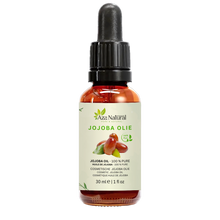
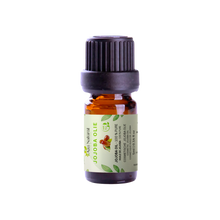
Anyone looking for a thin oil for the face usually ends up with one of these three. Raspberry seed oil is, like kiwi seed oil, cold-pressed from the tiny seeds of a small fruit: golden to pale yellow, with a dry, almost matte finish and a light fruity scent, and it also needs to be kept cool. Jojoba oil is strictly speaking a liquid wax from the seed of a desert shrub: pale yellow, scentless and by far the longest keeping of the three. Kiwi seed oil sits in between: as thin as raspberry seed oil, with a little more shine and a faint green scent, and with a shelf life that argues for the 30 ml bottle. To temper the price or the shelf life, mix one part kiwi seed oil with two parts jojoba oil.
Is kiwi seed oil suitable for all skin types?
It is light enough that most people can use it on the face, including in the morning. As with any new oil, try it first: put one drop on the inside of your wrist and wait a day before using it on the face. If you are used to heavier oils, start with one drop on the jawline and look the next day at how the skin has taken it.
Can you use it if you are allergic to kiwi fruit?
Be careful. Kiwi is not on the European list of fourteen allergens that must be declared on food, but a kiwi allergy does occur, and the label of this oil names no fragrance components and comes with no analysis certificate. Whether the oil from the seed carries the same substances as the flesh, we do not know. Anyone who reacts to kiwi should do the wrist test first or, better, ask a doctor, and should not use the oil on the lips. If a reaction occurs, stop and consult a doctor.
What to keep in mind
Kiwi seed oil is for external use only. It is a cosmetic oil, so it is not for the kitchen and not meant to be swallowed, even though the fruit itself is edible. It is not a sunscreen and does not replace one. Avoid contact with the eyes and rinse with lukewarm water if it happens. Keep out of reach of children. Keep the bottle cool, dark and closed, and finish an opened bottle within a year.
Where does Aza Natural's kiwi seed oil come from?
We sell kiwi seed oil pure and cold-pressed, made in India as the label states, without added fragrance or carrier oils, in 30 ml and 100 ml bottles of dark glass with a pipette. If you have never used it, start with 30 ml. Other single-ingredient plant oils are in the pure oils section, and a similarly light seed oil with a different character is goji berry seed oil.