
Dans cet article
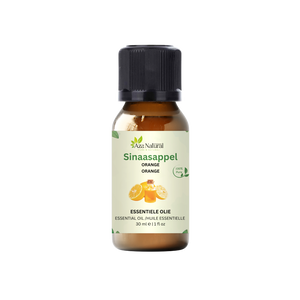
Sweet orange oil is the oil cold-pressed from the peel of the sweet orange, Citrus sinensis. In citrus fruit the oil sits in small glands in the peel, and pressing breaks those glands open; that is where the strong, sweet orange smell comes from, and it is the smell you know from zesting an orange. Our sweet orange oil is a concentrated citrus oil, not an ordinary plant oil from a seed or a kernel, and it comes in a 30 ml and a 100 ml bottle. You use it diluted, in a diffuser or as a scent in things you make yourself.
Many people search for 'orange oil benefits' or search for 'orange essential oil uses'. We make no claim about what this oil does in or under the skin, to the mood or anywhere else in the body: the label says nothing about that, and neither do we. What you can check yourself is what the oil is, how it smells and behaves, how to dilute it, and how to use it, in what amount. That is what this guide is about.
Sweet orange oil at a glance
- What it is: the cold-pressed oil from the peel of the sweet orange, Citrus sinensis.
- Kind of oil: a concentrated citrus oil, in the group of the essential oils; not a carrier oil.
- Colour and smell: thin and light in colour; a strong, sweet, fresh orange smell that evaporates quickly.
- On the skin: always diluted, two drops per tablespoon of base oil, butter or cream; never neat.
- Other uses: a few drops in a burner or diffuser; a scent in home-made soap, bath salt, scrubs and balms.
- Sunlight: use a blend with this oil in the evening rather than before going into the sun or under a sunbed.
- Bottle and storage: 30 ml or 100 ml; cool, dark and tightly closed, because citrus oils lose their smell sooner than other oils.
A peel oil is not a carrier oil
Most oils in our shop are pressed from a seed, a kernel or a nut and consist of fat: jojoba, sweet almond, argan. Those are carrier oils, and you can put them on the skin as they are. Sweet orange oil is different. It is pressed from the peel, it is not a fat but a mixture of volatile aroma compounds, and it evaporates: put a drop on a piece of paper and after an hour there is hardly a mark left, where a drop of almond oil leaves a lasting grease spot. That is why it smells so strongly, why a bottle lasts so long, and why it never goes on the skin neat. Other essential oils are in the essential oils collection; the carrier oils you dilute them in are in the carrier oils collection.
How it smells and behaves
Sweet, fresh and unmistakably orange, the smell of the peel and not of the juice. It is one of the few smells almost nobody objects to, and it combines easily, for instance with cinnamon or vanilla in winter and with a flower water in summer. The smell is strong at first and fades within an hour or two on the skin, sooner than a heavier essential oil such as patchouli; that is the nature of a citrus oil. The oil is thin and light in colour and pours easily, so dose it drop by drop.
How to dilute it for the skin
Mix two drops of sweet orange oil with a tablespoon of base oil, butter or cream, and only then apply that blend. Do not put this oil on the skin neat: an oil from a citrus peel is more irritating than an ordinary plant oil from a seed. As a base, jojoba oil is the usual choice for the face and sweet almond oil for the body and for massage; a melted butter such as shea butter works for a balm. Mix in a clean dark bottle or jar, label it with the date and the ratio, and use it within a few months. For the face and for children, use half the amount. Test the blend on the inside of the wrist first and wait a day.
In a burner or diffuser
A few drops in the water of an oil burner or an ultrasonic diffuser scent a room for an hour or two; three to five drops for a living room is usual, fewer for a bedroom. Because the smell of a citrus oil fades sooner than that of a wood or resin oil, it is often paired with one, such as a few drops of cedarwood or frankincense underneath. Do not run a diffuser all day in a closed room, and keep it out of reach of children and pets. Diffusers are in the shop under the essential oils.
As a scent in home-made soap, scrubs and balms
Use sweet orange oil as the scent component in home-made soap, bath salt, scrubs and balms. Keep the share low: the smell is strong, and in a product that stays on the skin, such as a balm or a body butter, the same dilution applies as above, two drops per tablespoon of the oil or butter phase. In a rinse-off product such as a scrub or a soap you can go a little higher, but more oil does not give a longer-lasting smell; citrus fades in soap regardless. Add the oil only when a melted butter or a soap base has cooled to hand-warm, otherwise the smell evaporates on the spot. Ingredients for your own products are in the DIY collection.
Sunlight: why the evening is the better time
Citrus oils on the skin can make the skin more sensitive to sunlight. That is a property of pressed citrus peel oils and the reason we say: use a blend with sweet orange oil in the evening, and not just before you go into the sun or under a sunbed. In a diffuser, in soap that is rinsed off and in a bath salt this does not play a role. Anyone who wants an orange smell in a day cream picks the evening cream instead, or uses the oil in the diffuser.
How much you use and which bottle to choose
A drop is about 0.05 ml, so a 30 ml bottle holds about six hundred drops. For a diffuser, three to five drops a session, so more than a hundred sessions from 30 ml. For a skin blend, two drops per tablespoon, so a 100 ml bottle of body oil takes about a dozen drops. For soap, a few millilitres per batch. For most households 30 ml lasts a year, and because citrus oils lose their smell with time, that is the bottle to choose; 100 ml is for anyone who makes soap or scrubs regularly. Both bottles hold the same oil.
How to store it
Cool, dark and tightly closed, in the original dark bottle. Citrus oils lose their smell sooner than other oils and are sensitive to light and warmth, so do not leave the bottle on a windowsill or in a warm bathroom, and close it straight after use. An oil that smells flat, sharp or of turpentine instead of fresh orange has aged; do not use it on the skin any more.
What to watch out for
Not to be swallowed: this is a concentrated oil for external use and for the diffuser, and it is not the flavouring you know from the kitchen. Never neat on the skin; always two drops per tablespoon of base, and half that for the face and for children. Test a blend on the inside of the wrist first and wait a day. Avoid contact with the eyes and rinse with lukewarm water. Keep out of reach of children and pets. Do not use a blend with this oil before sun or sunbed. The oil is pressed from the peel and nothing is added; an analysis certificate of this batch we do not have.
Frequently asked questions
Can I put sweet orange oil on my skin neat?
No. Always diluted: two drops per tablespoon of base oil, butter or cream, and half that for the face.
Is sweet orange oil the same as orange essential oil?
Yes. Sweet orange oil, orange peel oil and orange essential oil are names for the oil pressed from the peel of Citrus sinensis. Bitter orange and neroli come from a different tree and a different part of it.
Why does the smell fade so fast?
Because a citrus oil consists of volatile compounds that evaporate. That is the nature of the oil, not a fault of the bottle.
Can I use it in the sun?
Better not on the skin. Use a blend with this oil in the evening, or use the oil in a diffuser.