
In diesem Artikel
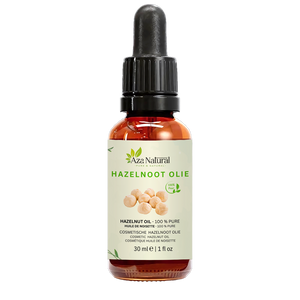
Hazelnut oil is the cold-pressed plant oil from the kernel of the hazelnut, Corylus avellana, the fruit of the hazel. On the label of our hazelnut oil the ingredient reads Corylus avellana (Hazel) Nut Oil, cold-pressed and made in Turkey, as a cosmetic oil for hair and skin; there is no second ingredient. It is a thin, light yellow oil with a faint nutty smell and a dry finish, sold in a 30 ml and a 100 ml bottle with a pipette.
Many people search for 'hazelnut oil benefits' or search for 'hazelnut oil for face'. We make no claim about what this oil does in or under the skin or to the hair: the label says nothing about that, and neither do we. That the oil is often chosen by people who do not want to shine is a choice of the buyer, not an effect we promise. What you can check yourself is what the label says, how the oil looks, smells and feels, why this bottle is not the one for the kitchen, who should leave it alone, and how to use it. That is what this guide is about.
Hazelnut oil at a glance
- Label: Corylus avellana (Hazel) Nut Oil, the only ingredient; cold-pressed; made in Turkey.
- Plant: the hazel, Corylus avellana; the oil comes from the kernel, not from the shell or the husk.
- Colour and smell: light yellow; a faint nutty smell that is gone once the oil has absorbed.
- Texture: thin; absorbs fast and leaves a dry feel, without shine.
- Character: a largely monounsaturated oil, which is why it keeps longer than walnut oil.
- Allergen: hazelnut is a nut on the European list of fourteen allergens; anyone who reacts to nuts does not use this oil without asking a doctor.
- Use: face and under make-up, hands, hair ends and scalp mask, home-made blends; external use only.
- Bottle and storage: 30 ml or 100 ml, dark glass with pipette; cool, dark and closed, finish within a year.
Where the oil comes from
The hazel is a shrub or small tree of the temperate north; its nut sits in a leafy husk, and inside the hard shell is the kernel, the part you eat and the part this oil is pressed from. Turkey grows most of the world's hazelnuts, and the label says the oil is made there. It says cold-pressed and names one ingredient; it does not give a shelf life, and it does not carry a certification mark, so we mention none.
How the oil looks, smells and feels
Light yellow and clear, with a faint nutty smell that you notice when you open the bottle and no longer notice once the oil is on the skin. The texture is what sets it apart: thin, fast to absorb, and with a dry finish. A minute after applying, the skin feels smooth rather than oiled, without shine. That is why it goes under make-up so easily, and why it is often chosen for the face by people who find sweet almond oil too rich. It keeps longer than walnut oil, because it consists largely of monounsaturated fat, which reacts more slowly with air.
Not the oil for the kitchen
Hazelnut oil also exists as a food, the fragrant oil for a dressing or a cake. That is a different product: pressed, bottled and checked as food. The oil in this bottle is a cosmetic oil for hair and skin, as the label says, and is not to be swallowed or cooked with. The two look alike; the label tells them apart.
Who should not use it
Hazelnut is a nut on the European list of fourteen allergens. Anyone who reacts to hazelnut or to other nuts does not use this oil without asking a doctor, and whether the pressed oil contains traces of the nut protein we cannot say without an analysis certificate. For everyone else: one drop on the inside of the wrist first, and wait a day. A nut-free alternative with a similarly light feel is jojoba oil.
On the face and under make-up
Two to three drops on lightly damp skin after cleansing, pressed in with the flat of the hand. After a minute the oil has absorbed and the cream or the make-up can go over it; nothing slides. In the evening, the same amount on its own. Three drops is about 0.15 ml, so a 30 ml bottle lasts two hundred applications, more than six months.
On the hands
One or two drops after washing the hands, rubbed in down to the cuticles. Because the oil absorbs so fast, it leaves no greasy fingers, and you can carry on with what you were doing. About 0.1 ml a time, so three hundred applications from 30 ml.
On the hair ends and in a scalp mask
One or two drops rubbed between the palms and smoothed over the ends of dry hair. As a scalp mask, a tablespoon of hazelnut oil mixed with a tablespoon of sweet almond oil, massaged in, left for half an hour and washed out; both are nuts, so anyone who reacts to nuts takes jojoba oil instead. A tablespoon is 15 ml, so six masks from 100 ml or two from 30 ml.
In a home-made blend
One part hazelnut oil to one or two parts of another oil or melted butter gives a face oil or a balm that feels lighter than the heavier oil alone; it is the part that brings the dry finish. Mix in a clean dark glass bottle, label it, and finish it within a few months. Other oils to blend with are in the carrier oils collection.
How much you use and which bottle to choose
For the face, the hands and the hair ends, 30 ml lasts for months and is empty before the oil is old. For the body, half a teaspoon per arm or leg, or for scalp masks and blends, 100 ml is cheaper per millilitre. Both bottles hold the same oil, in dark glass with a pipette. More oil does not give a better result, only a face that shines longer; with this thin oil, less is nearly always enough.
How to store it
Cool, dark and tightly closed, not in the bathroom or on a windowsill, and finish an opened bottle within a year; the label gives no shelf life and we give none either. If the oil smells sharp or rancid instead of faintly nutty, do not use it any more.
What to watch out for
External use only: this is a cosmetic oil, so do not swallow it and do not use it in the kitchen. Hazelnut is a nut on the allergen list; see above. Apply one drop to the inside of the wrist first and wait a day. Avoid contact with the eyes and rinse with lukewarm water. Keep out of reach of children. Other single-ingredient oils are in the pure oils collection.
Frequently asked questions
Is hazelnut oil suitable for someone with a nut allergy?
Hazelnut is a nut on the European allergen list. Anyone who reacts to nuts does not use this oil without asking a doctor; jojoba oil is a nut-free alternative.
Does it leave the skin shiny?
No. It is thin, absorbs within a minute and leaves a dry finish.
Can I cook with it?
Not with this bottle. It is a cosmetic oil; the hazelnut oil for the kitchen is a different product.
How long does it keep?
Cool, dark and closed, use an opened bottle within a year. It keeps longer than walnut oil.