
In diesem Artikel
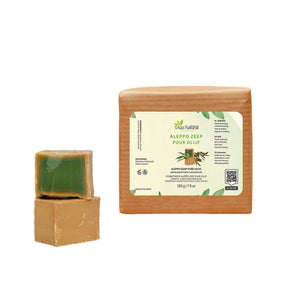
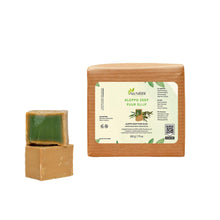
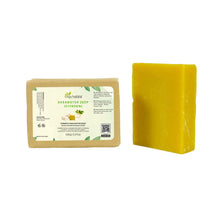
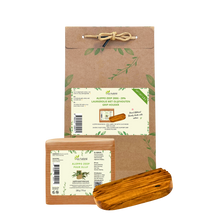
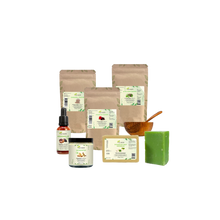
Aleppo laurel soap is a hard bar of soap made from olive oil, laurel berry oil, water and lye, after a method from the city of Aleppo in Syria that is one of the oldest still made the same way. On the ingredient line of our Aleppo soap it reads Olive Oil, Laurel Oil, Water, Sodium Hydroxide; more is not in it. A fifth of the oil in this bar is laurel berry oil, the rest olive oil. The bar weighs 200 grams, is ochre-brown outside and green inside, and smells of olive oil and laurel, earthy and without perfume.
Many people search for 'natural laurel soap' or search for 'aleppo soap benefits'. We make no claim about what this soap does in or under the skin, on the scalp or to the hair: the label says nothing about that, and neither do we. What you can check yourself is what is in the bar, where it is made, how it looks and lathers, and how to use it. That is what this guide is about.
Aleppo laurel soap at a glance
- Ingredient line: Olive Oil, Laurel Oil, Water, Sodium Hydroxide; no perfume, no colouring, no other additions.
- Laurel share: a fifth of the oil is laurel berry oil, the rest olive oil.
- Made in: Lebanon, by soap makers who left Syria after the war broke out.
- Look and smell: a hard bar of 200 grams, ochre-brown outside and green inside; an earthy smell of olive oil and laurel.
- Lather: less abundant than an ordinary bar, but fine and creamy; work with the lather, not with the bar.
- Use: face, body and hands; hair, instead of shampoo; shaving soap, whipped with a brush; external use only.
- Keeping: on a soap dish that drains; several months at daily use.
What is in the bar, and what the lye does
Four things: olive oil, laurel berry oil, water and lye, that is sodium hydroxide. The lye is the alkali that turns the oils into soap; in the boiling and the long drying that follows, the oil and the lye react with each other, and in the finished bar there is no lye left. That is why it is on the ingredient line and not in the bar you hold. There is no perfume, no colouring and no other addition; the smell comes from the two oils themselves.
The laurel berry oil is pressed from the berries of the bay laurel, the tree whose leaves you know from the kitchen; the more of it a bar contains, the more pronounced the smell and the softer the bar feels. In this bar a fifth of the oil is laurel berry oil.
Where it is made, and why that matters
The method comes from Aleppo in Syria. Our soap is made in Lebanon, by soap makers who left Syria after the war broke out. For this soap that is not a detail: after boiling, the bars are cut and left to dry and ripen for months, and how that goes depends on temperature and humidity, which in Lebanon are close to those of Aleppo. The ripening is also what gives the bar its two colours, see below.
Why it is brown outside and green inside
Fresh from the boiling, the whole bar is green from the olive and laurel berry oil. During the months of drying, the outside oxidises in the air and turns ochre-brown; inside, the original green stays. Cut a bar in half and you see both colours. As you use the bar, the brown layer wears away and the green comes through; that is normal, and a bar that is green all the way through is simply a bar that has been in use.
Work with the lather
Wet the bar and rub lather up between the hands or on a washcloth; apply that lather and not the bar itself. Aleppo soap is hard and lathers less abundantly than an ordinary soap, but the lather that comes is fine and creamy. Rinse with lukewarm water. A soap is alkaline, and on some skins it leaves a slightly tight feel after washing; a few drops of a light oil or your usual cream afterwards takes care of that. On the face, most people use it in the evening and follow with an oil from the face oils collection.
On the hair, instead of shampoo
Rub lather up between the hands and massage that into the scalp, rather than running the bar over the hair. Rinse thoroughly. Soap is alkaline and hair reacts to that: many people rinse afterwards with water with a splash of vinegar in it, so the hair lies smooth again. The first few washes the hair can feel different from what you are used to with shampoo; anyone switching gives it a few weeks. The bar is also used as a shaving soap, whipped to a lather with a brush.
How to make the bar last
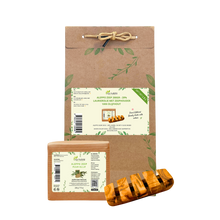
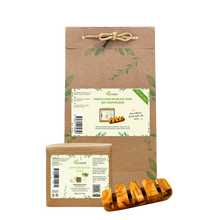
Put the bar on a soap dish that lets the water run off, and let it dry between uses. A bar of 200 grams lasts several months at daily use, provided it can dry; if it lies in a puddle it is gone in a few weeks. The shop has the same soap with an olive-wood holder in several shapes for anyone who wants one. Other bars are in the pure soaps collection, and a soap on a shea butter base is the Tamale shea butter soap.
What to watch out for
External use only. Avoid the eyes and rinse with plenty of water if lather gets in. If you have a sensitive skin, test the lather on a small patch first and wait a day. Apply a cream or an oil after washing if the skin feels tight. The bar contains laurel berry oil; anyone who reacts to bay laurel tests first. The ingredient line names no perfume and no other addition; an analysis certificate of this batch we do not have. Keep out of reach of children.
Frequently asked questions
What does a fifth laurel berry oil mean?
That one fifth of the oil in the bar is laurel berry oil and the rest olive oil. More laurel means a stronger smell and a softer bar.
Is there lye in the finished soap?
No. The lye reacts with the oils during soap making; it is on the ingredient line because it went in, not because it is left.
Why is the bar brown outside and green inside?
The outside oxidises during the months of drying; the inside keeps the green of the oils.
Can I wash my hair with it?
Yes. Massage lather into the scalp, rinse well and finish with a vinegar rinse so the hair lies smooth.