
In this article
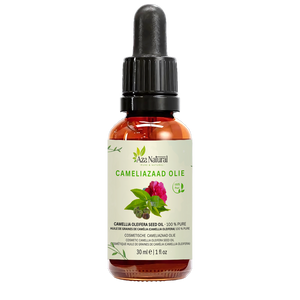
Camellia seed oil is the cold-pressed plant oil from the seeds of the oil camellia, Camellia oleifera, a shrub or small tree of the tea family that is native to southern China and grown there for the oil in its seeds. On the label of our camellia seed oil the ingredient reads Camellia Oleifera Seed Oil, cold-pressed and made in Japan, as a cosmetic oil for hair and skin; there is no second ingredient. It is a thin, light yellow oil with a dry finish, sold in a 30 ml and a 100 ml bottle with a pipette.
Many people search for 'camellia seed oil benefits' or search for 'camellia oil for skin and hair'. We make no claim about what this oil does in or under the skin, on the scalp or to the hair: the label says nothing about that, and neither do we. What you can check yourself is what the label says, which camellia is in the bottle, how the oil feels and smells, and how to use it, in what amount. That is what this guide is about.
Camellia seed oil at a glance
- Label: Camellia Oleifera Seed Oil, the only ingredient; cold-pressed; made in Japan.
- Plant: the oil camellia, Camellia oleifera, of the tea family; not the tea plant and not the Japanese camellia, which each give their own oil.
- Colour and smell: light yellow; a faint, slightly nutty smell that fades quickly.
- Texture: thin; absorbs fast and leaves a dry finish, no shine.
- Keeping: a mostly monounsaturated oil, so it keeps longer than a highly unsaturated seed oil; a cool, dark cupboard is enough.
- Use: face, under make-up, hair ends and hair mask, base of a home-made serum or balm; external use only.
- Allergens: camellia is not on the European list of fourteen; the label names no fragrance.
- Bottle and storage: 30 ml or 100 ml in dark glass with a pipette; cool, dark and closed, finish within a year.
Three camellias, three oils
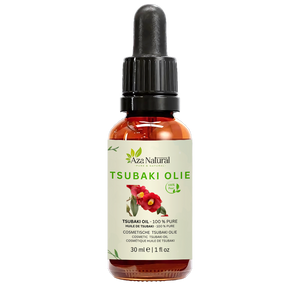
The genus Camellia counts hundreds of species, and three of them give an oil that is sold in a bottle; all three are in our shop, each with its own label. This page is about the oil from Camellia oleifera, the oil camellia of southern China; the label says Camellia Oleifera Seed Oil. Tsubaki oil is the oil from the seeds of the Japanese camellia, Camellia japonica, the ornamental shrub with the large red flowers; tsubaki is the Japanese word for that plant, and its oil has been used in Japan for the hair for centuries. Anyone looking for tsubaki is looking for that other bottle; we do not say that camellia seed oil is the same thing, as our old page did.
Green tea seed oil comes from the seeds of the tea plant, Camellia sinensis, the plant the tea leaves come from; its label says Camellia Sinensis Seed Oil. The three oils resemble each other in feel, all three thin with a dry finish, and differ in smell and in price; the plant on the label is the difference you can check.
Where the oil comes from
The seeds of the oil camellia sit a few at a time in a round, green seed capsule, as drawn on the label, and are dried and pressed after the harvest; hence the name Seed Oil. The label says made in Japan; where the seeds were grown, it does not say, and so neither do we. In China an oil for the kitchen is pressed from the same plant; that is a different product with a different check, and this bottle is the cosmetic oil.
How it feels and smells
Light yellow and clear, thin, and faint in smell: a slight nutty note when you open the bottle, gone within a minute on the skin. It absorbs fast and leaves what we call a dry finish: after a minute you hardly feel it and the skin does not shine. Camellia seed oil belongs to the mostly monounsaturated oils, like olive, almond and hazelnut oil, and such oils keep longer than a highly unsaturated seed oil; it simply stands in the cupboard, cool and dark. The label names no content of anything, and so we name none.
On the face and under make-up
Two to three drops on lightly damp skin after cleansing, pressed in with the flat of the hand rather than rubbed; after a minute the oil has absorbed and the skin does not shine. Under make-up, do the same with two drops, wait a minute and then apply foundation or day cream; because the oil leaves a dry finish, the make-up does not slide or pill, and that is the reason people choose this oil for it. If you use a day cream, you can also mix two drops into the portion of cream in your hand. The first time, use one drop along the jawline and look at the skin the next day. Other oils for the face are in the face oils collection.
On the hair
In the hair, camellia seed oil goes on the ends, not on the scalp: rub one drop, two for long or thick hair, between the palms and smooth it through the last centimetres of dry hair; more weighs the hair down and on the roots it turns greasy fast. For a hair mask, take a teaspoon, spread it through the lengths of dry hair, leave it an hour, under a towel if you like, and wash it out with a mild shampoo; thick hair may need two washes. The oil is thin and rinses out more easily than a butter or a heavy oil. This is the use the Japanese camellia oil, tsubaki, is known for; with this bottle you do the same with the oil camellia. Other oils for the hair are in the hair oils collection.
As the base of a home-made serum or balm
In a home-made serum or face oil, camellia seed oil is the base that has little smell of its own and keeps long. It can form the whole oil phase: fill a 30 ml bottle with camellia seed oil and add a few drops of another oil for the smell or the feel if you like. For a balm, melt a tablespoon of shea butter in a bain-marie and stir in one to two teaspoons of camellia seed oil; one part oil to two or three parts butter gives a firm balm, more oil a softer one.
Because camellia seed oil keeps longer than most seed oils, a second oil, if you add one, sets the shelf life of the blend: make a small amount at a time, keep it cool and dark and use it within a few months. The label names no ratio; these are our own habits. Other base oils are in the carrier oils collection.
Camellia seed oil next to hazelnut oil and jojoba oil
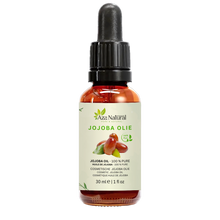
Anyone looking for an oil that does not shine usually ends up with one of these three. Hazelnut oil is, like camellia seed oil, cold-pressed, light yellow and thin, with a dry feel and a light nutty smell; the difference is the nut: anyone who reacts to nuts leaves hazelnut oil alone, and camellia seed oil comes from a seed that is not on the allergen list. Jojoba oil is strictly a liquid wax, light yellow, scentless and by far the longest-keeping; it feels a little richer than camellia seed oil and stays on the skin longer. Camellia seed oil sits in between: as dry as hazelnut oil, with a fainter smell, and with a shelf life close to that of jojoba.
How much you use and which bottle to choose
Face: two to three drops a time, once a day; three drops is about 0.15 ml, so a 30 ml bottle lasts two hundred applications, more than six months. Under make-up: two drops, so three hundred times from 30 ml. Hair ends: one or two drops on the days you want them, which hardly counts. Hair mask: a teaspoon of 5 ml a time, so six masks from 30 ml and twenty from 100 ml. A home-made serum: a 30 ml bottle a time. More oil does not give a better result, only skin that takes longer to absorb it; with this thin oil less is nearly always enough.
For the face, under make-up or on the hair ends, 30 ml is enough for six months and fits in a toilet bag. For regular hair masks or as the base of your own blends, 30 ml is gone in a few weeks and 100 ml is cheaper per millilitre; because this oil keeps well, a big bottle is no risk as long as it stands cool and dark and is used within a year. Both bottles hold the same oil, in dark glass with a pipette.
How to store it
Cool, dark and tightly closed, preferably not in the bathroom, and finish an opened bottle within a year, because the label gives no shelf life. If the oil smells sharp or rancid instead of faint and nutty, do not use it any more.
What to watch out for
External use only: this is a cosmetic oil, so do not swallow it and do not use it in the kitchen, even though a kitchen oil is pressed from the same plant in China; that is a different product with a different check. It is not a sunscreen and replaces none. Apply one drop to the inside of the wrist first and wait a day. Camellia is not on the European list of fourteen allergens and the label names no fragrance; an analysis certificate of this batch we do not have, so we promise nothing about traces. If your skin reacts, stop. Avoid contact with the eyes and rinse with lukewarm water. Keep out of reach of children. Other single-ingredient oils are in the pure oils collection.
Frequently asked questions
Is camellia seed oil the same as tsubaki oil?
No. Tsubaki is the oil of the Japanese camellia, Camellia japonica; this is the oil of the oil camellia, Camellia oleifera. Both are in the shop, each with its own label.
Can I use it under make-up?
Yes. Two drops, wait a minute, then foundation. The dry finish is the reason people choose it for that.
Does it need the fridge?
No. It is a mostly monounsaturated oil and keeps well in a cool, dark cupboard; finish it within a year.
Is it a nut oil?
No. It comes from the seed of a shrub of the tea family, which is not on the European allergen list.