
In this article
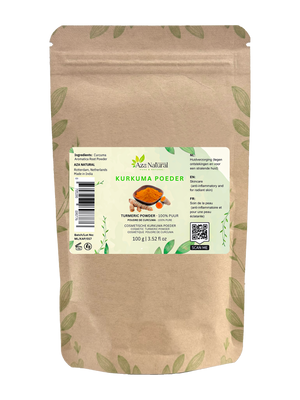
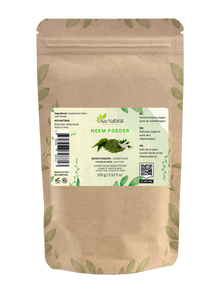
Turmeric powder is the dried and ground rhizome of a turmeric plant from the ginger family. The turmeric powder we sell is from the wild turmeric: on the label the ingredient reads Curcuma Aromatica Root Powder, as a cosmetic powder for skin care, made in India. That is a different species from the turmeric in the kitchen. The kitchen spice is Curcuma longa, grown for its deep orange-yellow rhizome; Curcuma aromatica grows wild at the foot of the Himalaya and in the Western Ghats, has a paler, more yellow rhizome and a fresh, camphor-like scent, and in India it is not eaten but used on the skin. This powder is not meant to be eaten.
Many people arrive here after searching for 'turmeric powder benefits', usually with the kitchen spice and its uses in food in mind. This article is about something else: the cosmetic powder of the wild turmeric, what its label says, how it looks and smells, why it stains, and how to use it in a face mask and in ubtan. About what turmeric does in or on the body we make no claim. The label states no figures for any component and there is no analysis of this batch, so this text contains none either.
Turmeric powder in brief
- Ingredient: Curcuma Aromatica Root Powder, exactly as printed on the label, and the only ingredient.
- Plant: the wild turmeric, Curcuma aromatica, from the ginger family; the rhizome is dried and ground.
- Not the same as kitchen turmeric: that is Curcuma longa; this powder is cosmetic and not for eating.
- Origin: made in India, as the label states; the plant grows wild there.
- Colour and scent: a fine yellow powder, usually paler than kitchen turmeric; aromatic, fresh and slightly camphor-like.
- It stains yellow: on skin, nails, textiles and bathroom grout; on the skin for a few hours, in textiles often for good.
- Use: a face mask with clay or chickpea flour, and ubtan for the body; external use only.
- Sizes and storage: 100, 250 or 500 grams in a resealable bag; cool, dry and dark, and the symbol on the label gives twelve months after opening.
Wild turmeric and kitchen turmeric: what is the difference?
Curcuma aromatica and Curcuma longa are two species from the same plant genus, the way apple and pear come from the same family. Curcuma longa is the cultivated spice: a deep orange-yellow rhizome, warm and earthy in scent, dried and ground into the turmeric powder from the spice rack. Curcuma aromatica is the wild relative: the rhizome is paler yellow, the scent is sharper and camphor-like, and the plant is not grown as a spice but gathered in the wild and used in India on the skin, under the name kasturi manjal in the south and jangli haldi in Hindi. That is the species on this label.
Whoever wants turmeric for cooking buys a product packed and labelled as food; this powder is cosmetic and we give no advice on cooking with it or swallowing it. Both species stain yellow; how strongly and for how long depends on the amount and on your skin.
What does the powder look and smell like?
The powder is yellow, fine and dry, and it smells aromatic, fresher and more camphor-like than the spice from the kitchen. With water, rose water or yoghurt it stirs into a smooth yellow paste, usually together with a clay powder or chickpea flour, because on its own it is too strong in colour. And that is the first thing to know about it: it stains. The yellow colouring of the rhizome sticks to skin, nails, textiles and grout. On the skin the yellow haze fades within a few hours; from a white towel it often does not come out. Use old towels, wear old clothes, and rinse the sink straight away.
What do people use turmeric powder for?
- In a face mask. A teaspoon stirred through two to three teaspoons of white clay, multani mitti or chickpea flour, mixed with water, rose water or yoghurt; ten to fifteen minutes and rinse.
- In ubtan, the Indian body paste. One part turmeric to four parts chickpea flour and one part sandalwood powder, mixed with water or milk and rubbed in circles over damp skin.
- For the haldi ceremony. At Indian weddings the bride and groom are covered in a yellow turmeric paste the day before the feast; in South India that is traditionally the wild turmeric.
How do you make a face mask with turmeric powder?
Put a teaspoon of turmeric powder, about three grams, in a small bowl of glass or ceramic and add two to three teaspoons of white clay, multani mitti or chickpea flour. Add water, rose water or plain yoghurt a little at a time and stir until you have a smooth paste that does not run off the spoon. Apply it to a cleansed face with the fingertips or a brush, avoiding the eyes and the lips, and leave it for ten to fifteen minutes; rinse it off before it is completely dry, with lukewarm water and a dark washcloth.
The skin may look slightly yellow afterwards; that fades within a few hours, and an oil or cream applied after rinsing takes most of it off. Once a week is enough. Make the paste fresh each time; a mixed paste does not keep.
How do you use turmeric powder in ubtan?
Ubtan is the Indian paste of chickpea flour, herb powders and liquid that is rubbed over the body before a bath, and turmeric powder is its fixed yellow component. Mix one part turmeric powder with four parts chickpea flour and one part sandalwood powder, and add water or milk until you have a paste the thickness of yoghurt. Rub it in circles over damp skin, arms, legs and body, let it dry for a few minutes and rub it off with the hands under the shower, then rinse. For one full body application you need about four tablespoons of the dry mixture, so a little over a teaspoon of turmeric. Do this on a day when you can wear old clothes afterwards.
How much turmeric powder do you need, and which size?
A face mask takes a teaspoon, about three grams; more gives mainly more yellow. A weekly mask uses about 150 grams a year, so the 100 gram bag lasts a good half year and the 250 gram bag well over a year. Ubtan for the whole body takes a teaspoon and a bit per application. If you want to try the powder, start with 100 grams or the 15 gram sample; the 500 gram bag is for anyone who uses it in ubtan for the whole family or in a mixture they make in quantity. All bags hold the same powder and reseal.
How should turmeric powder be stored?
Cool, dry, dark and well closed; the bag reseals. Light slowly fades the yellow of the rhizome and moisture makes the powder clump, so keep it out of the bathroom. The symbol on the label gives twelve months after opening. Take the powder out with a dry spoon and close the bag straight away.
What to keep in mind
This turmeric powder is for external use only and is not meant to be eaten or made into a drink; it is a cosmetic powder, not a spice, and it has not been packed or labelled as food. Put a little paste on the inside of your wrist first, rinse it after ten minutes and wait a day. Avoid contact with the eyes and rinse with lukewarm water if it happens. Keep out of reach of children. The label names one ingredient and no fragrance components; an analysis certificate of this batch is not available. And count on the colour: skin, nails, towels, clothes and grout all take on yellow, and only the skin lets go of it within hours.
Where does Aza Natural's turmeric powder come from?
We sell turmeric powder of the wild turmeric, Curcuma aromatica, pure and without additions, made in India as the label states, in resealable bags of 100, 250 and 500 grams. White clay, multani mitti and sandalwood powder to mix it with are sold separately, and rose water to mix it with is described in our article on rose water.