
In this article
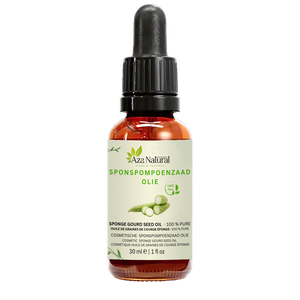
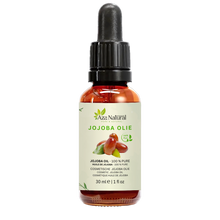
Sponge gourd seed oil is the plant oil pressed from the seeds of the luffa, a climbing plant of the cucumber family whose fruit, once dried and cleaned, is sold as a bath sponge. On the label of our sponge gourd seed oil the ingredient reads Luffa Cylindrica Seed Oil, and there is no second ingredient. The oil is light yellow and thin, with a faint, seedy smell, and it comes in a 30 ml and a 100 ml bottle with a pipette.
Many people search for 'sponge gourd seed oil benefits' or search for 'luffa seed oil'. We make no claim about what this oil does in or under the skin, on the scalp or to the hair: the label says nothing about that, and neither do we. What you can check yourself is where the seeds come from, how the oil looks, smells and feels, how it behaves on the skin and how to use it, in what amount and how often. That is what this guide is about.
Sponge gourd seed oil at a glance
- Label: Luffa Cylindrica Seed Oil, the only ingredient.
- Plant: the luffa or sponge gourd, a member of the cucumber family; the oil comes from the seeds, not the fruit.
- Colour and smell: light yellow; faint and seedy, gone once the oil has absorbed.
- Texture: thin; spreads easily, absorbs quickly and leaves no greasy film.
- Use: face, hair ends and scalp, and as part of a cream or home-made serum; external use only.
- Amount: two to three drops for the face, one drop for the ends, a few drops for the scalp.
- Bottle and storage: 30 ml or 100 ml with pipette; cool, dark and closed, and use within about a year of opening.
Where the seeds come from
The luffa, botanically Luffa cylindrica and also listed as Luffa aegyptiaca, is grown in warm regions for two things. Young, the fruit is cooked as a vegetable. Left to ripen and dry on the vine, it turns into a light, fibrous skeleton: the luffa sponge you find in bathrooms. When that dried fruit is cleaned, the seeds fall out of the fibre, dozens of flat, dark seeds per fruit, and those seeds are what this oil is pressed from. So the sponge and the oil come from the same plant, but from different parts of it, and the sponge is a by-product of the oil as much as the other way round.
What the label says, and what it does not
The label names one ingredient, Luffa Cylindrica Seed Oil. It does not name a country of origin or a pressing method, and it does not give a shelf life. Our supplier provides no ingredient breakdown for this oil, so we do not quote one here; anything you read elsewhere about what this oil contains is not something we can confirm from the bottle in front of us. What we can say is what the oil looks, smells and feels like, because you can check that with the first drop.
How the oil looks, smells and feels
In the bottle the oil is light yellow and clear. It is thin: a drop runs off a fingertip rather than sitting on it, spreads easily over the skin and absorbs within a minute or two without leaving a greasy film. The smell is faint and seedy, a little like the inside of a cucumber seed, and it does not linger; once the oil has absorbed, there is nothing left to smell. On a light-coloured towel it leaves no mark. Compared with the other oils in the shop it sits at the light end, next to jojoba oil and watermelon seed oil, and far from thick oils such as castor oil.
On the face
Cleanse, pat the skin dry but leave it slightly damp, and put two to three drops in your palm. Rub the hands together and press them onto the face and neck rather than rubbing. On damp skin the oil spreads further and you need less of it. Because it absorbs quickly and does not shine, it can go under a day cream or make-up in the morning as well as on its own at night. If the skin still looks shiny after a quarter of an hour, that was a drop too many; use one less next time.
In a cream or a home-made serum
One drop stirred into a single portion of cream in the palm, just before you apply it, is the simplest way to use the oil. For a home-made face oil, sponge gourd seed oil can make up a large part of the blend, because it is thin and nearly scentless: one part of a richer oil such as pomegranate seed oil to three or four parts sponge gourd seed oil in a clean dark glass bottle gives a blend that still feels light. Use three to four drops of the blend at a time and finish it within a few months. Other plant oils for blending are in the carrier oils collection.
On the hair and the scalp
On the ends: one drop rubbed between the palms until only a sheen remains, then smoothed over the last few centimetres of dry or towel-dried hair. Because the oil is thin, one drop is enough for most hair and two is the most for thick hair; more weighs the ends down. On the scalp: a few drops massaged in with the fingertips before washing, left for twenty to thirty minutes and washed out with shampoo. A thin oil like this rinses out in one wash.
How much you use and which bottle to choose
A drop from the pipette is roughly 0.05 ml. Three drops on the face once a day is about 0.15 ml, so a 30 ml bottle lasts around two hundred applications, more than six months; for the face and the hair ends, 30 ml is the right size and the bottle is empty long before the oil is old. If you use the oil on the body after showering, half a teaspoon per arm or leg, or as the main part of a home-made blend, 100 ml is the size to choose. Both bottles hold the same oil, in dark glass with a pipette.
How to store it
Cool, dark and tightly closed, preferably not in the bathroom and not on a sunny windowsill, and use an opened bottle within about a year. Your nose is the most reliable check: fresh, the oil smells faint and seedy; old, it smells sharp or like paint. If it does, do not use it on the skin any more.
What to watch out for
External use only: this is a cosmetic oil for skin and hair, not for cooking and not to be swallowed. If your skin is sensitive, apply a drop to the inside of the elbow or the wrist first and wait a day. Avoid contact with the eyes and rinse with lukewarm water if it happens. Keep out of reach of children. The luffa is not on the European list of fourteen allergens and the label names no fragrance, but there is no analysis certificate for this batch, so we promise nothing about traces. Other single-ingredient oils are in the pure oils collection.
Frequently asked questions
Is this the same plant as the luffa sponge?
Yes. The sponge is the dried, cleaned fruit; the oil is pressed from the seeds that come out of that fruit.
Does the oil feel greasy?
No. It is thin, spreads easily and absorbs within a minute or two without a film.
What does it smell like?
Faint and seedy, and the smell is gone once the oil has absorbed.
How long does a bottle last?
Three drops a day on the face: a 30 ml bottle lasts more than six months. Use an opened bottle within about a year.