
In this article
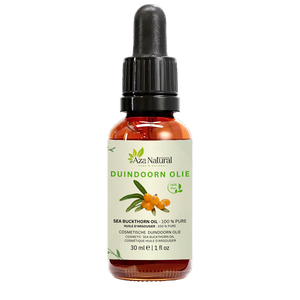
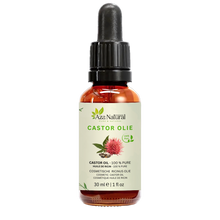
Sea buckthorn oil is the cold-pressed plant oil from the orange berry of the sea buckthorn, Hippophae rhamnoides, a thorny shrub with narrow silver-grey leaves that grows in the dunes along the North Sea and across Europe and Asia as far as the Himalaya. On the label of our sea buckthorn oil the ingredient reads Hippophae Rhamnoides Oil, cold-pressed and made in India, as a cosmetic oil for hair and skin; there is no second ingredient. It is a deep orange, medium-thick oil with a fruity, sour smell, sold in a 30 ml and a 100 ml bottle with a pipette.
Many people search for 'sea buckthorn oil benefits' or search for 'sea buckthorn oil for health and beauty'. We make no claim about what this oil does in or under the skin, on the scalp or to the hair: the label says nothing about that, and neither do we. What you can check yourself is what the label says, why the oil is so orange, why it is used diluted, and how to use it, in what amount. That is what this guide is about.
Sea buckthorn oil at a glance
- Label: Hippophae Rhamnoides Oil, the only ingredient; cold-pressed; made in India.
- Plant: the sea buckthorn, Hippophae rhamnoides, a thorny shrub of dunes and mountain slopes; the oil comes from the orange berry.
- Colour and smell: deep orange to orange-red from the carotenoids of the berry; fruity and sour, a pronounced smell.
- Texture: medium-thick; diluted in a thin base oil the blend absorbs like that base oil.
- It stains: undiluted it colours the skin orange and marks light fabric; that is a property of the oil, not a fault.
- Dilution: one to two drops per half teaspoon of base oil, or one part to ten to twenty parts; never neat on the face.
- Use: diluted on the face, on dry patches, in the hair and in a home-made blend or balm; external use only.
- Bottle and storage: 30 ml or 100 ml in dark glass with a pipette; cool, dark and closed, finish within twelve months.
Why the oil is so orange, and why it stains
The berry of the sea buckthorn is orange, and that colour passes into the oil. The pigments are carotenoids, the same group that gives carrots, apricots and the buriti fruit their colour; they dissolve in fat and not in water, which is why the colour sits in the oil and does not simply wash out of a towel. A diluted blend absorbs into the skin without a visible trace; undiluted sea buckthorn oil leaves an orange haze that only fades after a wash or a night. How dark the oil is varies from harvest to harvest, from orange to orange-red; a lighter or darker bottle is not a different oil.
The same pigments are sensitive to light: a bottle on a windowsill fades, and fading is the sign that the oil is going off. All of this says something about the colour of the oil, not about what it does on the skin. The label names no content of carotenoids or of anything else, and so we name none.
Pulp oil or seed oil: what the label says and does not say
Two oils are pressed from the sea buckthorn berry. The oil from the flesh, the pulp oil, is deep orange-red and thick; the oil from the small seed inside the berry is lighter in colour and thinner. In the trade both are called sea buckthorn oil, and so are blends of the two. The label on this bottle says Hippophae Rhamnoides Oil, the name of the species and of the oil, and does not say which part of the berry it was pressed from; so we do not know for certain and do not write it down. What you can see is that the oil in this bottle is deep orange and medium-thick, and that is how it behaves: as an oil you dilute rather than spread neat.
What sea buckthorn oil is not: an essential oil. There is no distilled sea buckthorn oil; what is sold under that name is always a pressed oil from the berry, and you use it diluted in a base oil, not in a diffuser.
How to dilute it in a base oil
You always use sea buckthorn oil diluted; that is not caution but the only way to keep the colour on the skin and the fabric where you want it. Take a clean dark bottle or simply your palm. The ratio: one to two drops of sea buckthorn oil per half teaspoon of base oil, about 2.5 ml, or, for a larger amount, one part sea buckthorn oil to ten to twenty parts base oil. As base oil choose jojoba oil for the face, sweet almond oil for the body, or the oil you already use. Stir or shake briefly; the blend turns pale orange but no longer stains the skin. If you mix a bottle in advance, use a long-keeping base such as jojoba and finish the blend within three months.
On the face
Put half a teaspoon of jojoba oil or another thin base oil in the palm and add one to two drops of sea buckthorn oil. Rub the hands together briefly and press the blend onto cheeks, forehead and neck with the flat of the hand, on lightly damp skin after washing. Do this in the evening rather than the morning: if you still see a faint orange glow, it has the night to fade, and for the first few times swap a white pillowcase for a dark one. Two drops is enough for the whole face; if a shine remains, the base oil was too much, not the sea buckthorn. The first time, try a small patch along the jawline and look at the skin the next day.
On the body and in the hair
On the body, sea buckthorn oil goes on the dry patches, not all over: elbows, knees, heels and hands. Mix two to three drops into a teaspoon of sweet almond oil and massage it in in the evening; use a dark towel and an old T-shirt, because even diluted the oil can leave a trace on white cotton before it has absorbed.
In the hair it always goes through a base oil and never neat: three to five drops in a tablespoon of jojoba, coconut or sweet almond oil, spread over the lengths and ends of dry or towel-dried hair, left for half an hour to an hour under a towel and washed out with shampoo, twice if needed. Do not use it neat or in a large share on light blond, bleached or grey hair; the orange can stay in it. Other oils for the hair are in the hair oils collection.
In a home-made blend or balm
If you make your own face oil, lip balm or body butter, sea buckthorn oil is the ingredient that sets the colour and the smell, in a small share: one part to ten to twenty parts of the oil or butter phase, so half a teaspoon to a teaspoon per 50 ml. More makes the product more orange until it stains lips and skin again, and changes nothing else. Stir the sea buckthorn oil in only when a melted butter has cooled to hand-warm. Mix small amounts and use them within a few months. Do not mix it with water or anything watery without a preservative. Other base oils are in the carrier oils collection.
Sea buckthorn oil next to buriti oil
Buriti oil is the other deep orange oil in the shop, cold-pressed from the flesh of a palm fruit from the Amazon; it smells milder and sweeter than sea buckthorn oil, stains just as readily and is diluted for the same reason. Anyone who wants the orange colour in a blend but not the sour, fruity smell of the berry picks buriti; anyone who likes that smell picks sea buckthorn. Both go one to two drops per half teaspoon of base oil.
How much you use and which bottle to choose
A drop from the pipette is about 0.05 ml, so a 30 ml bottle holds about six hundred drops and a 100 ml bottle about two thousand. For the face you use one to two drops a time: at two drops a day, 30 ml lasts more than nine months, longer than we would keep an opened bottle. For the hair, three to five drops a time, once a week, which you hardly notice on the bottle. For a home-made blend, half a teaspoon to a teaspoon per 50 ml of finished product, and then 100 ml is the size that fits. More sea buckthorn oil a time does not give a better result, only a more orange blend.
If you use it diluted on the face or now and then in the hair, 30 ml is plenty for a year and the bottle is empty before the oil is old; it is the bottle we would start with. If you make balms, body butters or face oils for the whole household, 100 ml is cheaper per millilitre; keep the big bottle cool and dark and finish it within twelve months. Both bottles hold the same oil, in dark glass with a pipette.
How to store it
Cool, dark and tightly closed, not on a windowsill and preferably not in the bathroom, and finish an opened bottle within twelve months, because the label gives no shelf life. If the colour fades or the oil smells sharp, old or rancid instead of fruity and sour, do not use it any more.
What to watch out for
External use only: this is a cosmetic oil, so do not swallow it and do not use it in the kitchen, even if you know the sea buckthorn berry from juice or jam. Apply one drop of the diluted blend to the inside of the wrist first and wait a day; if the skin turns red or stings, do not use it. Never neat on the face and not on broken skin. Avoid contact with the eyes and rinse with lukewarm water. Bear in mind that the oil marks towels, bedding and clothes, also diluted while it has not yet absorbed. The label names one ingredient and no fragrance; an analysis certificate of this batch we do not have. Keep out of reach of children.
Frequently asked questions
Can I use sea buckthorn oil neat on my face?
Better not. Neat it leaves an orange haze and marks the pillowcase; diluted it does not. Half a teaspoon of base oil with one to two drops is the usual ratio.
Is this the pulp oil or the seed oil?
The label does not say, so neither do we. The oil in the bottle is deep orange and medium-thick.
Can I swallow it?
No. It is a cosmetic oil for hair and skin, as the label says, and not a food.
Will it colour my hair?
Diluted, on dark hair, no. Neat or in a large share on light blond, bleached or grey hair the orange can stay in; test a strand first.