
In this article
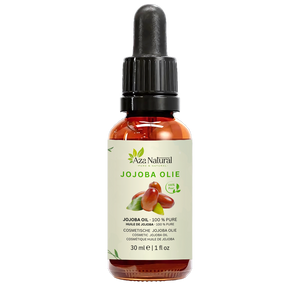
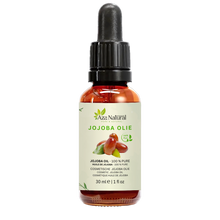
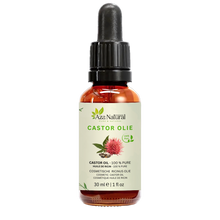
Jojoba oil is the cold-pressed oil from the seed of the jojoba shrub, Simmondsia chinensis, a shrub of the Sonoran Desert in the south-western United States and north-western Mexico. On the label of our jojoba oil the ingredient reads Simmondsia Chinensis Seed Oil, cold-pressed and made in India, as a cosmetic oil for hair and skin, and there is no second ingredient. In Dutch the product is called jojoba olie, which is why that spelling appears in the address of this page.
Many people search for 'jojoba oil benefits' or search for 'jojoba oil for face and hair'. We make no claim about what this oil does in or under the skin, on the scalp or to the hair: the label says nothing about that, and neither do we. What you can check yourself is what the label says, that the oil is thin, light yellow and nearly scentless, that it is a liquid wax and what that means for keeping it, and how to use it. That is what this guide is about.
Jojoba oil at a glance
- Label: Simmondsia Chinensis Seed Oil, the only ingredient; cold-pressed; made in India.
- Plant: the jojoba shrub, Simmondsia chinensis, from the Sonoran Desert; the oil comes from the brown, acorn-shaped seed.
- Liquid wax: chemically not a fat but a wax; it does not turn rancid quickly and keeps far longer than an ordinary plant oil.
- Colour and smell: light yellow; nearly scentless.
- Texture: thin; absorbs fast and leaves little film; sets solid in the cold and turns liquid again at room temperature.
- Use: face, carrier oil for essential oils and blends, hair ends and scalp, make-up removal; external use only.
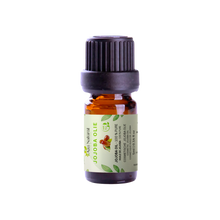
- Bottle: 30 ml or 100 ml with pipette, and a 5 ml sample; cool, dark and closed, no fridge needed.
Why jojoba oil is a liquid wax, and what that means
An ordinary plant oil, such as grape seed or walnut oil, consists of fats, and fats react with oxygen, light and warmth; that is why an old bottle of seed oil smells rancid and belongs in the fridge. Jojoba oil consists of wax esters, the same kind of compound as beeswax, only liquid at room temperature. You notice that in three ways. First, keeping: jojoba oil does not turn rancid quickly and keeps far longer than a seed oil, without a fridge; the label gives no shelf life, and in practice the bottle is empty before the oil is old.
Second, the cold: in a cold cupboard or in transit in winter, jojoba oil sets into a pale, waxy mass, and that is not spoilage; put the bottle at room temperature and it turns clear and liquid again by itself. Third, blending: because the base does not age quickly, it is the other oil in a home-made blend that decides how long the blend keeps, and a blend on jojoba is easy to keep.
How the oil looks, smells and feels
Light yellow and clear, thin, and nearly scentless: open the bottle and you smell almost nothing, and what there is has gone once the oil is on the skin. It absorbs fast and leaves little film, also during the day and under a day cream. That absence of smell and colour is the reason it is the usual base for anything you add an essential oil to: it does not get in the way.
On the face
Two to three drops on lightly damp skin after cleansing, pressed in with the flat of the hand rather than rubbed. The oil absorbs quickly, so it works in the morning under a cream or make-up as well as at night. If the skin still looks shiny after a quarter of an hour, use one drop less next time; with this thin oil, less is nearly always enough.
As a carrier oil for essential oils and blends
This is the use most bottles are bought for. At most one drop of essential oil per teaspoon of jojoba oil; because jojoba oil is scentless and long-keeping, it is the standard base for a home-made blend. Mix in a clean dark glass bottle and label it with the date. For a richer face oil, add one part of a heavier or more expensive oil, such as pomegranate seed oil, to three or four parts jojoba. Other carrier oils, and the essential oils themselves, are in the carrier oils and essential oils collections.
On the hair and the scalp
On the ends, sparingly: one or two drops rubbed between the palms and smoothed over the last centimetres of dry hair, not on the roots. On the scalp, a teaspoon massaged in before washing as a pre-wash treatment, left for half an hour and washed out; because the oil is thin, one wash is enough. Once a week at most.
To remove make-up
Three to four drops on a dry cotton pad, pressed onto the closed eyelid or the lashes for a few seconds and wiped outwards; then wash with a mild cleanser as usual. Avoid getting oil in the eye itself, and rinse with lukewarm water if it happens.
How much you use and which bottle to choose
Face: two to three drops once a day; three drops is about 0.15 ml, so a 30 ml bottle lasts two hundred applications, more than six months. Hair ends: one or two drops on wash days, so 30 ml lasts a year. Scalp: a teaspoon of 5 ml, so twenty applications from 100 ml. Make-up removal: about 0.2 ml a time, so a hundred and fifty times from 30 ml. Carrier oil: a 10 to 30 ml bottle of blend a time, so one to three from 30 ml and three to ten from 100 ml.
For the face, the hair ends and make-up removal, 30 ml is enough for months; as a regular base for blends or for the scalp, 100 ml is cheaper per millilitre, and because jojoba oil keeps, a large bottle is no risk. If you do not know the oil yet, there is a 5 ml sample.
How to store it
Cool, dark and tightly closed; the fridge is not needed. If the oil has gone thick or cloudy, it has been cold: at room temperature it turns clear again, and that is not spoilage. If it smells sharp or rancid instead of neutral, which with this oil takes a very long time, do not use it any more.
What to watch out for
External use only: this is a cosmetic oil, so do not swallow it and do not use it in the kitchen. Apply one drop to the inside of the wrist first and wait a day. Jojoba is not a nut and is not on the European list of fourteen allergens, and the label names no fragrance; whether this batch contains anything a particular person reacts to, we cannot rule out without an analysis certificate, so we promise nothing. If you react, stop. Avoid contact with the eyes, also when removing make-up. Keep out of reach of children.
Frequently asked questions
Why is jojoba oil called a liquid wax?
Because chemically it consists of wax esters, like beeswax, and not of fats like an ordinary plant oil. That is why it keeps so long.
My jojoba oil has gone solid. Is it spoiled?
No. It has been cold. At room temperature it turns clear and liquid again.
Is jojoba oil a nut oil?
No. It comes from the seed of a desert shrub unrelated to almond, hazelnut or macadamia, and it is not on the European allergen list.
How many drops of essential oil per teaspoon?
At most one.