
In this article
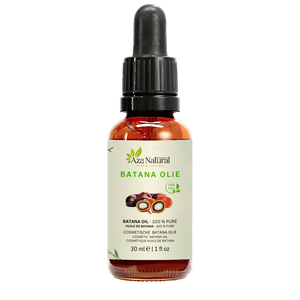
The batana plant is the American oil palm, Elaeis oleifera, a palm of the humid lowland rainforest of Central America that grows in La Mosquitia, on the north coast of Honduras. It carries bunches of small orange fruits, and inside each fruit sits a nut. Batana oil is the oil pressed from that nut. On the label of our bottle it reads Elaeis Oleifera Kernel Oil, in which kernel means the nut inside the fruit, and that is the only ingredient.
Most people arrive on this page after searching for 'batana plant benefits' or 'batana oil for hair'. What follows is narrower than that: what the plant is, how the oil is made, what the label says, how the oil feels and smells, and how to use and store it. About what the oil does in or under the skin or to the hair root we make no claim; the label states nothing of the kind and there is no analysis of this batch.
Batana oil in brief
- Ingredient: Elaeis Oleifera Kernel Oil, exactly as printed on the label, and the only ingredient.
- Plant: the American oil palm, Elaeis oleifera, sold under the name batana plant; the oil comes from the nut, not from the orange flesh of the fruit.
- Origin: La Mosquitia in Honduras, where the Miskito make the oil by hand.
- Colour and scent: clear orange, with a mild, nutty scent.
- Texture: thick and syrupy; at room temperature it firms up a little and turns liquid again in a warm hand.
- Use: first of all hair and scalp, and dry patches of skin; external use only.
- Sizes: 30 ml and 100 ml, singly or in packs of three or six.
- Storage: cool, dark and closed; oil that has hardened turns liquid again in a bowl of warm water.
What is the batana plant?
Batana is a palm of the humid lowland rainforest of Central America. It is a relative of the African oil palm, Elaeis guineensis, but a different species, and it is not grown on plantations the way palm oil is. The trees stand in and around the forest and the harvest is gathered by hand. One point of confusion is worth clearing up at the start: batana is not the same as bataua, an oil from Oenocarpus bataua, a different palm from the Amazon. The names look alike in a search box; the plants are not the same.
How is batana oil made?
The Miskito, the indigenous people of La Mosquitia, make the oil by hand. The nuts are boiled, pounded and pressed. Nothing is added and no solvents are involved. It is slow work, volumes are small and supply varies with the season, and that is the reason a small bottle of genuine batana oil is not cheap.
What does batana oil look, smell and feel like?
Pure batana oil is thick and syrupy, clear orange, and smells mildly nutty. The orange colour is the oil's own; nothing is added to it. At room temperature it firms up a little and turns liquid again in the warmth of your hand. A thin, pale, strongly perfumed liquid sold as batana oil is usually something else, or a blend. Compared with other hair oils, batana is thicker than argan oil and jojoba oil and sinks in more slowly; in weight it sits close to castor oil. Anyone who finds argan oil too light for a mask and castor oil too sticky usually ends up here.
What do people use batana oil for?
Batana oil is first of all a hair oil. It is heavy and sinks in slowly, which is exactly why it is chosen for hair that takes a lot of oil.
- Dry, porous or coarse hair. The oil coats the hair shaft; the hair feels smoother and combs through more easily.
- Curly and thick hair. The curl shows up better and frizz settles down, especially when the oil is used as a mask.
- Hair that has been coloured, heated or chemically straightened. A weekly mask is the usual way to use it.
- A dry scalp. Massaged in twenty minutes before washing, preferably mixed with a thinner oil.
- Dry skin. On elbows, knees, heels, hands and lips, straight after a shower; for the face it is too heavy for most people.
How do you use batana oil as a hair mask?
Warm a tablespoon of batana oil between your hands until it is liquid. Work it through towel-dried hair from the lengths to the ends and massage the scalp as well. Cover the hair with a shower cap or a towel; the warmth helps the oil spread. Leave it in for at least thirty minutes, or overnight, and wash it out with a mild shampoo. A thick oil does not always come out in one go, so wash twice if you need to. For the scalp on its own, mix a tablespoon of batana oil with a tablespoon of jojoba oil, massage it in twenty minutes before washing and shampoo it out.
How much and how often?
As a mask, once a week; for very dry or curly hair, twice. Count on a tablespoon, about 10 ml, for shoulder-length hair and two tablespoons for long or thick hair. As a daily finish, one or two drops on the ends is enough. That gives the arithmetic for the bottle: used only as a weekly mask, a 100 ml bottle lasts about ten weeks, and a 30 ml bottle is good for three masks. Every day is too much for fine hair; the oil builds up faster than it washes out.
How do you use it as a daily finish and on skin?
Rub one or two drops between your fingertips and smooth them over the ends of dry or towel-dried hair, keeping away from the roots if your hair gets greasy quickly. On skin, batana oil is a rich oil that sinks in slowly. Apply a small amount to elbows, knees, heels, hands or lips, preferably on skin that is still damp after a shower. Concentrate on the dry areas; more than the skin can take simply leaves a film on your clothes. For the face it is too heavy for most people; anyone who wants to use it there mixes one drop into a lighter oil or an ordinary cream.
How can you tell pure batana oil from a blend?
Look at three things: the colour is orange rather than pale yellow, the texture is thick rather than runny, and the scent is mild and nutty rather than perfumed. Then read the ingredient list. A product that lists batana somewhere in the middle of a long list is a blend, which is fine as long as that is what you wanted. Three names turn up for oil from this palm: batana oil is pressed from the nut (Elaeis Oleifera Kernel Oil), caiaué oil from the orange flesh of the fruit (Elaeis Oleifera Oil), and ojon is a brand name that made the oil known; many products under that name are blends.
Which bottle: 30 ml or 100 ml?
If you use batana oil as a weekly mask, choose 100 ml: a mask takes a tablespoon, and 30 ml gives you three of them. The 30 ml bottle is meant for trying the oil or for the ends only. Both bottles hold the same oil; per three or six bottles the price per millilitre is lower.
How should batana oil be stored?
Keep it cool, dark and closed. If the oil has gone hard, stand the bottle in a bowl of warm water for a few minutes and it turns liquid again; that is the nature of the oil and not a fault. Pure oil without additives does not keep as long as a formulated product, so buy a size you will actually use.
What to keep in mind
Batana oil is for external use only. If your skin is sensitive, put one drop on the inside of your wrist first and wait a day. The oil is orange: on dark hair you will not see it, but on light blond or grey hair frequent use can leave a warm tint, so test it on a loose strand first. Keep out of reach of children and away from the eyes.
Is batana oil sustainable?
The harvest is gathered from palms in and around the forest, by hand, by the communities that live there. That is a different model from industrial palm oil, and it is part of the reason the oil is valued. It also means volumes are small and the supply varies with the season.
Where does Aza Natural's batana oil come from?
Ours is pure batana oil from Honduras, sold without added fragrance or carrier oils, in bottles of 30 ml and 100 ml. What is in the bottle is the oil and nothing else. Other single-ingredient oils are in the pure oils section, and for hair that needs less weight there is a lighter alternative in abyssinian oil.