
In dit artikel
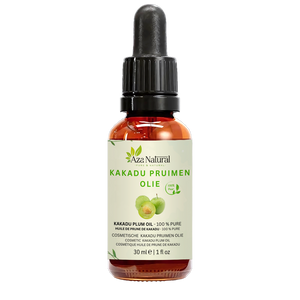
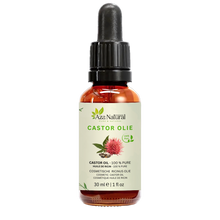
Kakadu plum oil is the cold-pressed plant oil from the seed of the Kakadu plum, Terminalia ferdinandiana, a small tree of the far north of Australia whose fruit is also called gubinge, murunga or billygoat plum. On the label of our Kakadu plum oil the ingredient reads Terminalia Ferdinandiana (Kakadu Plum) Seed Oill, printed with a double l, cold-pressed and made in Australia, as a cosmetic oil for hair and skin; there is no second ingredient. It is a light yellow, thin oil, sold in a 30 ml and a 100 ml bottle with a pipette.
Many people search for 'kakadu plum oil benefits' or search for 'unlocking the power of kakadu plum oil'. We make no claim about what this oil does in or under the skin or to the hair: the label says nothing about that, and neither do we. What you can check yourself is what the label says, which part of the fruit the oil comes from, how it looks and feels, and how to use it, in what amount. That is what this guide is about.
Kakadu plum oil at a glance
- Label: Terminalia Ferdinandiana (Kakadu Plum) Seed Oill, the only ingredient, printed exactly like that; cold-pressed; made in Australia.
- Plant: the Kakadu plum or gubinge, Terminalia ferdinandiana, of the Kimberley and the Northern Territory; the oil comes from the single seed inside the stone.
- Colour and smell: light yellow to golden yellow; a mild, slightly nutty, green smell that fades soon after applying.
- Texture: thin and light; absorbs within a few minutes without a greasy layer.
- Use: face, dry skin on body and hands, cuticles, hair ends as a leave-in; external use only.
- Not the pulp: the fruit is famous for its flesh; this is the seed oil, and the label names no content of anything.
- Bottle and storage: 30 ml or 100 ml in dark glass with a pipette; cool, dark and closed, finish within a year.
The tree and the fruit
The Kakadu plum grows wild in the tropical north of Australia, in the Kimberley and the Northern Territory, and takes its English name from Kakadu National Park. It is a small tree of the same family as the myrobalans. The fruit is a small, green to yellow stone fruit of about two centimetres, with one seed inside the stone; the fruit is picked from wild trees, and the tree is not grown in plantations on any scale. That is one reason the oil costs more per millilitre than most oils in the shop: there is little fruit, one seed per fruit, and a lot of seed goes into one bottle.
Why the oil is not the famous fruit pulp
The Kakadu plum owes its fame to its flesh, which is known for an unusually high content of ascorbic acid; for that, the fruit is picked and dried to a powder. Ascorbic acid dissolves in water and sits in the flesh. This oil is something else: it is pressed from the seed in the stone and consists, like every plant oil, of fats. The label names only the seed oil and no content of anything, and we have no analysis for this oil. So you will find no promise about the fruit's fame on this page or on the product page: you buy a light, cold-pressed seed oil from Australia, and that is what it is.
How the oil looks, smells and feels
Light yellow to golden yellow and clear. It is among the lightest plant oils we sell: thin, quick to absorb, with no greasy layer left after a few minutes. The smell is mild, slightly nutty and green, and it fades soon after applying. That lightness is the reason it is bought first of all as a face oil; on the body it takes more drops than a thicker oil, and for a daily body oil a bigger bottle or a fuller oil is the cheaper choice.
On the face
Cleanse the face and pat it dry, but leave the skin lightly damp. Put two to three drops of Kakadu plum oil in the palm, rub the hands together briefly and press the oil onto cheeks, forehead, nose and chin with the flat of the hand; pressing spreads a thin oil better than rubbing. Use it in the evening as the last step, or in the morning under a day cream or sunscreen; because it is so light it absorbs within a few minutes. You can also mix a few drops into your day cream. The first time, use one drop along the jawline and look at the skin the next day.
On the body, the hands and the cuticles
After showering, apply a few drops to skin that is still damp, on the places that feel dry: lower legs, elbows, shoulders. For the hands one drop per hand is enough: rub it into the back of the hand and press the rest into the cuticles, preferably in the evening. Because the oil is so thin, the whole body takes more drops than with a thick oil; for that, sweet almond oil or another oil from the carrier oils collection is the practical choice, and Kakadu plum oil stays for the face and the hands.
On the hair ends
Rub one drop of Kakadu plum oil warm between the palms and pass the hands through dry or towel-dried hair ends, from the middle to the tips and not on the roots. For long or thick hair it can be two drops. The oil is thin and disappears into the hair; it does not weigh fine hair down and does not need washing out. As a leave-in for the ends this is the only use in the hair we suggest; for the scalp there are fuller oils in the hair oils collection.
Kakadu plum oil next to rosehip oil and jojoba oil
All three are light oils bought mainly for the face. Rosehip oil is orange in colour and more sensitive to air and light; it turns rancid sooner and belongs in the fridge. Jojoba oil is in fact a liquid wax, keeps for years and feels the most neutral of the three. Kakadu plum oil sits in between: light yellow, thin, quick to absorb and mild in smell. Anyone who wants an even lighter and cheaper oil of a similar feel looks at grape seed oil.
How much you use and which bottle to choose
Face: once or twice a day, two to three drops a time. Three drops is about 0.15 ml, so at once a day a 30 ml bottle lasts more than six months and at twice a day more than three. Hands and cuticles: one drop per hand, daily. Hair ends: one drop after each wash or every other day. More than three drops on the face has no point: what the skin does not take up stays on top of it.
If you use Kakadu plum oil only for the face, 30 ml is enough for months and the oil stays fresh until the bottle is empty. If you also use it on the body or the hands, or blend a serum or cream with it yourself, 100 ml is cheaper per millilitre. Both bottles hold the same oil, in dark glass with a pipette. For an oil at this price, 30 ml is the bottle to start with.
How to store it
Cool, dark and tightly closed, preferably not in the bathroom and not on a windowsill. Use an opened bottle within a year: a thin, unsaturated seed oil like this one turns rancid with time, and the label gives no shelf life. If the oil smells sharp or sour instead of mild, do not use it any more.
What to watch out for
External use only: this is a cosmetic oil, so do not swallow it. Apply one drop to the inside of the wrist first and wait a day. Avoid contact with the eyes and rinse with lukewarm water. The label names one ingredient and no fragrance, preservative or other addition; whether this batch contains anything a particular person reacts to, we cannot rule out without an analysis certificate. Keep out of reach of children. Other single-ingredient oils are in the pure oils collection.
Frequently asked questions
Does this oil contain what the fruit is famous for?
The fruit's fame rests on its water-soluble flesh; this is the oil from the seed. The label names no content of anything, and we promise none.
Why is the label spelled Oill?
Because that is how it is printed on the bottle. We quote the label as it is; the plant and the oil are the same.
Do you sell the fruit or the powder?
No. We sell only the seed oil, in 30 ml and 100 ml.
Can I use it under sunscreen?
Yes, in the morning, a few minutes before the sunscreen. The oil itself is not a sunscreen and has no factor.