
In diesem Artikel
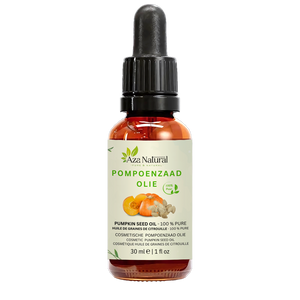
Pumpkin seed oil is the cold-pressed plant oil from the seeds of the pumpkin, Cucurbita pepo, a member of the cucumber family. On the label of our pumpkin seed oil the ingredient reads Cucurbita pepo (Pumpkin) Seed Oil, cold-pressed and made in China, as a cosmetic oil for hair and skin; there is no second ingredient. It is a dark green, medium-thick oil with a nutty smell, sold in a 30 ml and a 100 ml bottle with a pipette.
Many people search for 'pumpkin seed oil benefits' or search for 'pumpkin seed oil for hair'. We make no claim about what this oil does in or under the skin, on the scalp or to the hair, or in the body: the label says nothing about that, and neither do we. What you can check yourself is what the label says, that the oil is dark green and smells of pumpkin seed, how it behaves on the skin, why this bottle is not the one for the table, and how to use it, in what amount. That is what this guide is about.
Pumpkin seed oil at a glance
- Label: Cucurbita pepo (Pumpkin) Seed Oil, the only ingredient; cold-pressed; made in China.
- Plant: the pumpkin, Cucurbita pepo; the oil comes from the seeds, not from the flesh.
- Colour and smell: dark green, almost black in the bottle; earthy and nutty, like pumpkin seed, mostly gone once absorbed.
- Texture: medium-thick; absorbs fairly quickly, but the colour can stay visible on light skin for a moment and comes off on light textile.
- Compared with other oils: thinner than castor oil, fuller than jojoba and sesame oil; of the three, the only one with a pronounced colour.
- Use: scalp and hair, body and dry patches, face in the evening, and a home-made blend; external use only.
- Bottle and storage: 30 ml or 100 ml in brown glass with pipette; cool, dark and closed, and finish an opened bottle within a year.
Why the oil is so dark
Pumpkin seed oil is one of the darkest plant oils there is: in the bottle it looks almost black, and only in a thin layer on a white plate does the deep green show. The colour comes from the seed itself; nothing is added, and why the seed gives such a dark oil is not on the label, so we leave it there. What it means in practice: a few drops on the face absorb without a trace on most skin, but on very light skin the green can stay visible for a moment, and a spill on a white towel or pillowcase leaves a mark. That is why the evening is the time for this oil on the face, and why elbows, knees, heels and shins are the places on the body where the colour does not matter.
Not the oil for the kitchen
You may know pumpkin seed oil as the dark, intensely nutty oil from Styria that goes over a salad. That is a different product: pressed from roasted seeds, bottled and checked as food. The oil in this bottle is a cosmetic oil for hair and skin, as the label says, and is not to be swallowed or cooked with. The two look alike; the label tells them apart.
How the oil smells and feels
The smell is earthy and nutty, unmistakably pumpkin seed, and it fades largely once the oil has absorbed. The texture is medium-thick: thinner than castor oil, fuller than jojoba oil. It absorbs fairly quickly and leaves a slight sheen for a while. On the scalp it spreads well with the fingertips and rinses out with two washes.
On the scalp and in the hair
This is the use most bottles are bought for. Half to a whole teaspoon massaged into a dry scalp with the fingertips, parting by parting, left for half an hour to an hour under a towel, then washed out twice: the first shampoo on barely wet hair, the second as usual. Once a week is plenty. On the ends, one drop rubbed between the palms is enough; more weighs the hair down and the colour shows on very light hair, so test on a strand first if your hair is blond or grey.
On the body and on dry patches
Half a teaspoon per spot on skin that is still damp after showering, spread thinly: elbows, knees, heels and shins are where the colour does not matter and the fuller texture is welcome. Let it absorb before dressing, because the oil comes off on light textile.
On the face, in the evening
Two to three drops on lightly damp skin after cleansing, pressed in with the flat of the hand. Because of the colour, the evening is the right moment; in the morning it can tint a light foundation. If the skin still looks shiny after a quarter of an hour, use one drop less.
In a home-made blend
One part pumpkin seed oil to three to five parts of another oil or melted butter; more than that turns the whole blend green. In a body butter with shea butter it adds its nutty smell and its fuller feel; in a face oil on jojoba it is the part that gives colour and character. Mix in a clean dark glass bottle and finish it within a few months. Other oils to blend with are in the carrier oils collection.
How much you use and which bottle to choose
A drop is roughly 0.05 ml. For the face, three drops an evening is about 0.15 ml, so a 30 ml bottle lasts two hundred evenings. For the scalp, a teaspoon is 5 ml, so six applications from 30 ml and twenty from 100 ml; anyone who buys this oil for the scalp chooses 100 ml. For the body, half a teaspoon per spot, so 100 ml is forty spots. Both bottles hold the same oil, in brown glass with a pipette. If you do not know the oil yet, start with 30 ml.
How to store it
Cool, dark and tightly closed, not on a windowsill and preferably not in the bathroom, and finish an opened bottle within a year; the label gives no shelf life and we give none either. If the oil smells sharp or rancid instead of nutty, do not use it any more. The dark colour makes it hard to see whether the oil has changed; go by the smell.
What to watch out for
External use only: this is a cosmetic oil, so do not swallow it and do not use it in the kitchen. Apply one drop to the inside of the wrist first and wait a day; if it turns red or burns, do not use the oil. Not on broken skin. Avoid contact with the eyes and rinse with lukewarm water. Keep out of reach of children. The label names no fragrance and there is no analysis certificate for this batch, so we promise nothing about traces. Other single-ingredient oils are in the pure oils collection.
Frequently asked questions
Is this the same as the pumpkin seed oil for salads?
No. That is a food product from roasted seeds; this bottle is a cosmetic oil for hair and skin and is not to be swallowed.
Does the colour stain?
A few drops absorb without a trace on most skin. A spill on white textile leaves a mark; let the oil absorb before dressing.
How long do I leave it on the scalp?
Half an hour to an hour, then two shampoos.
Which bottle for the scalp?
100 ml: a teaspoon a week gives twenty applications.