
In dit artikel
Amaranth oil is the cold-pressed plant oil from the seed of the amaranth, Amaranthus caudatus, also called love-lies-bleeding after its long, hanging red flower plumes. The plant comes from the Andes and is now also grown in India, where this oil is made, as the label states. The seeds are tiny, about a millimetre across, and are eaten as a pseudo-grain; the Aztecs and Incas already grew amaranth as food. From those seeds a small amount of oil is pressed without heat, and the low yield is the reason amaranth oil costs more than most seed oils.
Many people arrive here after searching for 'amaranth oil benefits' or 'amaranth oil squalene'. This page keeps to what can be checked: what is on the label, what squalene is, how the oil looks, smells and feels, and how to use it. About what the oil does in or under the skin we make no claim. The label states no percentage of squalene or of anything else and there is no analysis of this batch, so this text contains no figures and no comparison with other oils.
Amaranth oil in brief
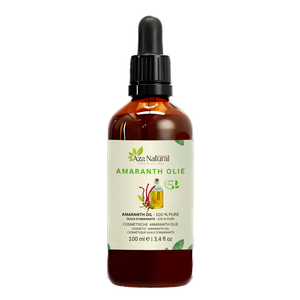
- Ingredient: Amaranthus Caudatus Seed Extract, exactly as printed on the label, and the only ingredient.
- Plant: the amaranth or love-lies-bleeding, Amaranthus caudatus; the oil comes from the seed.
- Method and origin: cold-pressed and made in India, as the label states.
- Colour and scent: pale yellow to golden yellow; mild, slightly nutty and grassy.
- Texture: thin and light; it sinks in within a few minutes without a greasy film.
- Squalene: naturally present, as the characteristic of this oil; the label states no percentage and we promise none.
- Use: the face, dry skin on the body and hands, cuticles and hair ends; external use only.
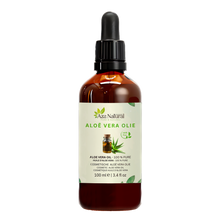
- Sizes: 30 ml and 100 ml in dark glass with a pipette, singly or in packs of three or six.
- Storage: cool, dark and closed; use an opened bottle within a year.
Why does the label say Seed Extract and not Seed Oil?
The label declares the ingredient as Amaranthus Caudatus Seed Extract, and we take that line over literally. What is in the bottle is the cold-pressed oil from the seed; that is printed on the same label, in three languages. Why the supplier chose the word extract for this declaration we do not know, and we do not guess. What we can say: there is one ingredient on the label, no carrier oil, no preservative and no fragrance, and the oil looks, smells and feels like a pure, light seed oil.
What is squalene, and what do we not say about it?
Squalene is an unsaturated lipid that the skin makes itself; it is part of the skin's own surface oil. It also occurs in plants, in olive oil and especially in amaranth seed, and that is the characteristic amaranth oil is known for. Squalene oxidises quickly: on its own it goes rancid within a short time, and for cosmetics it is therefore usually hydrogenated into squalane, the stable form that we sell separately as squalane oil. In amaranth oil the squalene sits in its natural, unsaturated form among the other components of the oil.
The label states no percentage and we have no analysis of this batch, so there is no figure here and no ranking against other oils. What does follow from it is practical: an oil with a lot of unsaturated material is kept cool and dark and finished within a year.
What does amaranth oil look, smell and feel like?
Pale yellow to golden yellow, thin and light. It spreads thinly, sinks in within a few minutes and does not leave a greasy layer, which is why it goes under a cream or under make-up as well as on its own at night. The scent is mild, slightly nutty and grassy, and disappears soon after applying. Because of that light feel it is first of all a facial oil.
What do people use amaranth oil for?
- On the face. Two or three drops on cleansed, slightly damp skin, in the evening as the last step or in the morning under a day cream; this is the most common use, because the oil is so light.
- On dry skin on the body and hands. A few drops after a shower on skin that is still damp, or one drop per hand rubbed into the back of the hand and the cuticles.
- In hair. One drop warmed between the palms and drawn through dry ends; the oil is thin and does not weigh hair down.
- In a serum or cream of your own. As the light oil phase, alone or with jojoba or grapeseed oil.
How do you use it on the face?
Cleanse the face and pat it dry, leaving the skin slightly damp. Put two or three drops in your palm, rub your hands together briefly and press the oil onto cheeks, forehead, nose and chin; pressing spreads a thin oil better than rubbing. Use it in the evening as the last step, or in the morning under a day cream or sunscreen; it sinks in within a few minutes. It can also be stirred into your day cream, a few drops per portion. Three drops is about 0.15 ml, so at once a day a 30 ml bottle lasts well over half a year and at twice a day a little over three months. More than three drops on the face has no point: what the skin does not take up stays on top.
How do you use it on the body and in hair?
After a shower, apply a few drops to skin that is still damp, on the places that feel dry: lower legs, elbows, shoulders. For the hands, one drop per hand is enough; rub it into the back of the hand and press the rest into the cuticles, preferably in the evening. Because the oil is so thin, the whole body takes more drops than a thick oil would; for a daily body oil a larger bottle or a heavier oil is more economical.
In hair, warm one drop between your palms and draw your hands through the dry or towel-dried ends, from the middle to the tips and not over the roots; two drops for long or thick hair. The oil disappears into the hair and does not need to be washed out.
For a mask on the scalp there are heavier oils, such as batana oil.
Can you mix amaranth oil with other oils?
Yes, and it is one of the more useful oils to mix with. A drop or two turns a thick, slow oil into something that spreads. Start at one part amaranth oil to three parts of the heavier oil and adjust to taste. As the oil phase of a serum, use it alone or with jojoba oil or grapeseed oil, in a small dark glass bottle, and finish the blend within a few months.
Is amaranth oil the same as squalane?
No. Squalane oil is a single substance, colourless and scentless, and stays stable for years; it is the thinnest of the oils mentioned here. Jojoba oil is strictly speaking a liquid wax, golden yellow, with a light scent of its own, and also keeps for years. Amaranth oil is a real pressed seed oil: pale yellow, with a mild nutty scent, with the natural squalene of the seed, and therefore limited in shelf life. Anyone who wants a neutral oil that keeps indefinitely chooses squalane or jojoba; anyone who wants a pressed oil with a character of its own chooses amaranth. A lighter and cheaper seed oil with a comparable texture is grapeseed oil.
How should amaranth oil be stored, and what to keep in mind
Cool, dark and closed, preferably not in the bathroom. Use an opened bottle within a year, because an oil with a lot of unsaturated material and squalene goes rancid over time. If the oil smells sharp or sour instead of mild, do not use it any more. Amaranth oil is for external use only; it is a cosmetic oil and not meant to be swallowed, even though the seed itself is eaten as a grain. Put one drop on the inside of your wrist first and wait a day. Avoid contact with the eyes and rinse with lukewarm water if it happens. Keep out of reach of children.
Which bottle: 30 ml or 100 ml?
If you use amaranth oil only on the face, 30 ml lasts for months and the oil stays fresh until the bottle is empty. If you also use it on the body or the hands, or blend a serum or cream with it, 100 ml is cheaper per millilitre. Both bottles hold the same oil, in dark glass with a pipette, and can be ordered singly or in packs of three or six.
Where does Aza Natural's amaranth oil come from?
We sell amaranth oil cold-pressed and pure, made in India as the label states, without added fragrance or other ingredients, in 30 ml and 100 ml bottles of dark glass with a pipette. Other light oils for the face are in the facial oils section, and all single-ingredient oils in the pure oils section.