


In dit artikel
Batana oil is the oil from the nut of the American oil palm, Elaeis oleifera, a palm of the rainforest of La Mosquitia on the north coast of Honduras, where the Miskito press it by hand: the nuts are boiled, pounded and pressed. On the label of our batana oil the ingredient reads Elaeis Oleifera Kernel Oil, in which kernel is the nut inside the fruit; there is no second ingredient. It is a thick, syrupy, bright orange oil with a mild nutty smell, sold in a 30 ml and a 100 ml bottle and as a 5 ml sample.
Many people search for 'batana oil' or search for 'batana oily oil', the odd phrase that the old, machine-written version of this page carried in its title. We make no claim about what this oil does to the hair, on the scalp or in the skin: the label says nothing about that, and neither do we. This page is about the bottle itself: what the label says, why the oil is orange, why it goes solid, how much a mask takes and which size to choose. How to use it as a hair mask step by step is in Batana Oil for Hair: How to Use It Step by Step; the palm and the Miskito are in Batana Plant and Batana Oil.
Batana oil at a glance
- Label: Elaeis Oleifera Kernel Oil, the only ingredient; no fragrance, no preservative, no other addition.
- Palm: the American oil palm, Elaeis oleifera, from La Mosquitia in Honduras; the oil comes from the nut, not from the orange fruit flesh.
- Colour and smell: bright orange from carotenoids; mild and nutty.
- Texture: thick and syrupy; semi-solid at room temperature, liquid in the hand.
- Use: mainly hair and scalp, as a mask before washing; dry patches on the skin; too heavy for the face; external use only.
- Sizes: 5 ml sample, 30 ml, 100 ml; a mask takes a tablespoon, so 100 ml gives about ten masks.
- Light hair: on light blond or grey hair the orange can leave a warm glow with frequent use; test a strand first.
What the label says, and what it does not
One ingredient: Elaeis Oleifera Kernel Oil. That is the botanical name of the American oil palm and the word kernel, the nut inside the fruit. The label names no fragrance, no preservative and no other addition, and it names no content of anything and no shelf life. So this page names none either. Anyone comparing batana oils looks at that line first: many products sold under the brand name ojon, which made the oil known, are blends, and the oil from the orange fruit flesh of the same palm, caiaué oil, has a different name on the label, Elaeis Oleifera Oil, without the word kernel.
Why the oil is orange, and what that means for light hair
The bright orange colour comes from the carotenoids that are naturally in the oil, the same group of pigments that colours carrots and palm fruit. They dissolve in fat, which is why the colour sits in the oil and shows on a towel or a pillowcase before the oil has been washed out. On dark hair you see nothing of it. On light blond, bleached or grey hair, frequent use can leave a warm glow; test a loose strand first, and wash a mask out well. The colour also fades in light: a bottle on a windowsill turns paler, and paler means the oil is going off.
Why it goes solid, and how to make it liquid again
Batana oil is thick and syrupy even when warm, and at room temperature it turns partly solid, like a soft paste; in a cold room or in winter it can go hard. That is the nature of this fat and not spoilage. Stand the closed bottle in a bowl of warm water for a few minutes, or warm a spoonful between the hands, and it is liquid again. Repeated setting and melting does the oil no harm; do not warm it in a microwave or on the stove. You recognise spoilage by the smell, sharp or rancid where the oil should smell mild and nutty, not by the texture.
How much a mask takes
A hair mask takes about a tablespoon, 10 ml, for medium-length hair and two tablespoons for long or thick hair; warmed between the hands, spread from the lengths to the ends, the scalp massaged along, covered with a shower cap or towel, left for at least half an hour or overnight, and washed out with a mild shampoo, twice if needed. Once a week is usual. As a daily finish one or two drops on the ends are enough. For the scalp on its own, mix a tablespoon of batana oil with a tablespoon of jojoba oil, which makes it easier to spread and to wash out. The full method, with the mistakes that make people give up, is in the step-by-step guide linked above.
On the skin
On the skin batana oil is a rich oil that absorbs slowly. A small amount on elbows, knees, heels, hands or lips, preferably on damp skin straight after showering, is where it fits. For the face most people find it too heavy; anyone who wants to use it there mixes one drop into a lighter oil or an ordinary cream. Other rich oils for dry patches are in the hands and heels collection.
Sample, 30 ml or 100 ml: which size to choose
The 5 ml sample is enough to see the colour, smell the oil and try it on the ends or on one strand of light hair; it is not enough for a mask. The 30 ml bottle gives three masks, or months of use on the ends only; it is the bottle to find out whether you want to keep using the oil. The 100 ml bottle gives about ten masks, so ten weeks at one a week, and is cheaper per millilitre; it is the size for anyone who has decided on a weekly mask. All three hold the same oil. Batana oil is thick, so a bottle with a wide neck or a spoon is easier than a pipette; scoop what you need with a clean, dry spoon and close the bottle.
Batana oil next to argan, jojoba and castor oil
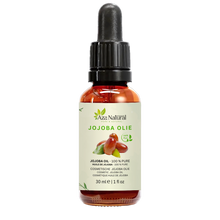
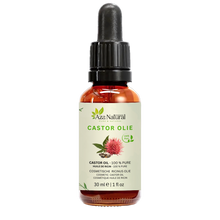
Batana oil is thicker and absorbs more slowly than argan oil and jojoba oil, and in weight it sits close to castor oil. Anyone who finds argan oil too light for a mask and castor oil too sticky usually ends up here. All four are cosmetic oils used externally, and none of them is a food.
How to store it
Cool, dark and tightly closed, out of the sun. Solid in the cold is normal; a bottle that has gone hard goes in warm water. The label gives no shelf life; finish an opened bottle within a year, and do not use it any more if it smells sharp or rancid instead of mild and nutty.
What to watch out for
External use only: this is a cosmetic oil, so do not swallow it. If you have a sensitive skin, apply one drop to the inside of the wrist first and wait a day. The oil is orange: on dark hair you see nothing, on light blond or grey hair test a strand first, and keep a dark towel for washing it out. The label names one ingredient and no fragrance; whether this batch contains anything a particular person reacts to, we cannot rule out without an analysis certificate. Keep out of reach of children. Other oils for the hair are in the hair oils collection.
Frequently asked questions
Is batana oil the same as ojon oil?
Ojon is a brand name that made the oil known, and many products under that name are blends. This bottle has one ingredient: Elaeis Oleifera Kernel Oil.
Why has my batana oil gone hard?
Because it is a thick fat that sets at room temperature and in the cold. Warm water or your hands make it liquid again; that is not spoilage.
Will it colour my hair?
Not dark hair. On light blond or grey hair frequent use can leave a warm glow; test a strand first.
Which size should I start with?
30 ml for three masks, or the 5 ml sample to see and smell the oil first. 100 ml once you know you want a weekly mask.

