
In dit artikel
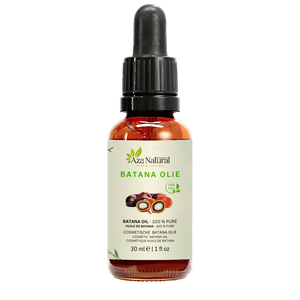
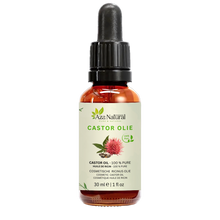
Batana oil is the thick, bright orange oil from the kernel of the American oil palm, Elaeis oleifera, a palm of the rainforests of Central and South America. On the label of our batana oil the ingredient reads Elaeis Oleifera Kernel Oil, and there is no second ingredient; kernel means the nut inside the fruit, not the orange pulp around it. It is sold in a 30 ml and a 100 ml bottle, and it is used above all on hair and scalp.
Many people search for 'batana oil hair loss' or search for 'batana oil for hair growth'. We make no claim about what this oil does to the hair, to the root or on the scalp: the label says nothing about that, and neither do we. What you can check yourself is what the label says, where the oil comes from, and what you see and feel when you put it on: a heavy oil that coats dry hair, leaves it softer to the touch while it is there, and rinses out in two shampoos. This article sticks to that, and to how to use the oil; a step-by-step routine is in the companion article.
Batana oil at a glance
- Label: Elaeis Oleifera Kernel Oil, the only ingredient; no fragrance, no additive.
- Plant: the American oil palm, Elaeis oleifera; the oil comes from the kernel, not from the orange pulp.
- Colour and smell: bright orange; mild and nutty.
- Texture: thick and syrupy, partly solid at room temperature; liquid again in the hand.
- Use: weekly hair mask, one or two drops on the ends, scalp in a blend, dry patches of skin; external use only.
- Amount: a tablespoon, about 10 ml, per mask; 30 ml is three masks, 100 ml about ten weeks.
- Storage: cool, dark and closed; oil that has set turns liquid again in warm water.
Where batana oil comes from
The word batana comes from the Miskito people of La Mosquitia, the rainforest on the northern coast of Honduras, who have made the oil by hand for as long as anyone knows: the kernels of the fruit are cooked, pounded and pressed. The palm, Elaeis oleifera, is the American cousin of the African oil palm; its fruit has orange pulp and, inside, a hard kernel, and batana oil comes from that kernel, which is what the word Kernel on the label says. The same oil is also sold, after a brand that made it known, as ojon oil; many products under that name are blends, whereas this bottle has one ingredient. The plant itself has its own article: batana plant and batana oil.
What the label says, and what it does not
The label names one ingredient and nothing else: no country of origin, no pressing method, no shelf life, no content of anything. That is all we can vouch for from the bottle in front of us. We have no analysis certificate for this batch, so we say nothing about what the oil contains, and a cosmetic oil is a cosmetic oil, so we say nothing about what it does. Everything below is what you can see, smell and feel yourself.
What you see and feel
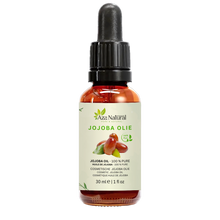
At room temperature the oil is partly set, like a soft butter, and bright orange; in the hand it turns liquid within seconds. It is thick and syrupy, thicker than argan oil and jojoba oil, which absorb in minutes, and close in heaviness to castor oil. On dry hair it coats the strand and makes it heavier and smoother to the touch for as long as it is there; it does not come out with water alone and usually takes two shampoos. The smell is mild and nutty and washes out. That is the whole of what we can describe: a heavy oil that stays, and hair that feels different while it does.
The colour: a word on light hair
On dark hair the orange does not show. On light blond or grey hair a warm tint can appear with frequent use; test a strand first. On a light towel the oil leaves an orange mark, so take an old one.
What we do not claim
You will read elsewhere that batana oil makes hair grow, stops it falling out, thickens it or mends it. We do not repeat any of that. The label does not say it, we cannot show it, and we do not promise it. Anyone who is losing hair and is worried about it talks to a doctor, not to an oil bottle. What we do say is how to use the oil, how much, and how often, so that whoever chooses it for how it makes hair feel gets that without waste.
As a hair mask
Warm a tablespoon of batana oil between the hands until it is liquid. Spread it over towel-dried hair from the lengths to the ends, and over the scalp too if you wish. Cover with a shower cap or a towel; the trapped warmth keeps the oil liquid and helps it spread. Leave it for at least thirty minutes, or overnight, then wash with a mild shampoo. A thick oil does not always come out in one go: wash twice if needed, the first time on barely wet hair. Once a week; twice for very dry or curly hair. A tablespoon, about 10 ml, for mid-length hair and two for long or thick hair.
On the ends and on the scalp
Between washes, one or two drops rubbed between the fingertips until only a sheen remains, then passed over the ends of dry or towel-dried hair; on fine hair one drop is already a lot. For the scalp, mix a tablespoon of batana oil with a tablespoon of jojoba oil, because neat it is too thick to spread parting by parting; massage in with the fingertips twenty minutes before shampooing. If your scalp gets greasy quickly, leave it out and keep the oil for the lengths.
On the skin
A small amount on elbows, knees, heels, hands or lips, preferably on skin that is still damp after a shower. For the face it is too heavy for most people; one drop mixed into a lighter oil or your usual cream in the hand is as far as it goes.
How much you use and which bottle to choose
A mask takes a tablespoon, so a 30 ml bottle is three masks and a 100 ml bottle about ten weeks at one mask a week. If you use batana oil as a weekly mask, choose 100 ml; the 30 ml bottle is for trying the oil, to see whether the smell and the heaviness suit you, or for the ends only. Both bottles hold the same oil.
How to store it
Cool, dark and tightly closed. That it sets in winter and turns liquid in summer is normal and changes nothing; if it has set, stand the bottle in warm water for a moment or warm the dose in the hand. The label gives no shelf life; finish an opened bottle within a year, and if the oil smells rancid instead of nutty, do not use it any more.
What to watch out for
External use only; do not swallow. If your skin is sensitive, apply a drop to the inside of the wrist first and wait a day. Test a strand if your hair is light blond or grey. Avoid contact with the eyes. Keep out of reach of children. Other oils for dry hair are in the carrier oils collection.
Frequently asked questions
Does batana oil make hair grow or stop it falling out?
That is not something we claim. The label says nothing about it and we cannot show it. What we describe is how the oil feels on the hair and how to use it.
Why is the oil solid in the bottle?
Because it is partly set at room temperature. In the hand or in warm water it turns liquid again.
Will it colour my hair?
Not dark hair. On light blond or grey hair a warm tint can appear with frequent use; test a strand.
How often should I use it?
Once a week as a mask, twice for very dry or curly hair, and one or two drops on the ends in between.