
Dans cet article
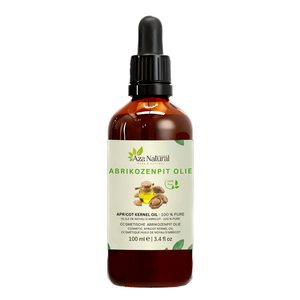
Apricot kernel oil is the cold-pressed plant oil from the kernel inside the stone of the apricot, Prunus armeniaca, a tree of the rose family and a close relative of the almond. On the label of our apricot kernel oil the ingredient reads Prunus Armeniaca Kernel Oil, cold-pressed and made in Turkey, as a cosmetic oil for hair and skin; there is no second ingredient. It is a light yellow, thin, nearly scentless oil in a 30 ml and a 100 ml bottle with a pipette. This page is about using it on the body, for massage and as a carrier oil; the general guide to the oil is Apricot Kernel Oil: What It Is and How to Use It on Face, Body and Hair.
Many people search for 'apricot kernel oil benefits' or search for 'the remarkable world of apricot kernel oil'. We make no claim about what this oil does in or under the skin: the label says nothing about that, and neither do we. What you can check yourself is what the label says, how the oil glides and absorbs, how much you need for a massage, an arm or a blend, and how long a bottle lasts. That is what this guide is about.
Apricot kernel oil for the body at a glance
- Label: Prunus Armeniaca Kernel Oil, the only ingredient; cold-pressed; made in Turkey.
- Feel: light and thin; glides for a shorter time than sweet almond oil and then absorbs, leaving no greasy layer.
- Smell: nearly none, at most faintly nutty, so a blend smells only of what you add.
- Body oil: a teaspoon per arm or leg on damp skin after showering.
- Massage: a tablespoon for a back or a pair of legs; half and half with sweet almond oil for a long massage.
- Carrier oil: at most two to three drops of essential oil per tablespoon.
- Bottle: 100 ml for body and massage, 30 ml to try; finish within a year.
- Patch test: related to the almond, an allergen; anyone who reacts to nuts or stone fruit tests first.
How it glides and absorbs
Every massage oil sits somewhere between two extremes: an oil that glides for a long time and stays on the skin, and an oil that absorbs within minutes. Apricot kernel oil sits closer to the second. It spreads easily, glides for a shorter time than sweet almond oil, its closest relative in the shop, and then absorbs, leaving the skin soft to the touch but not greasy. Some people prefer that, because they can dress soon after; others want a longer glide for a long massage, and for them the answer is a blend, see below. Next to jojoba oil it is very similar in feel and a little richer.
As a body oil after showering
A teaspoon per arm or leg, on skin that is still damp; the oil spreads further on damp skin and absorbs within minutes, so you can dress soon after. Warm it between the palms first and apply it with long strokes. For the whole body count on a tablespoon to a tablespoon and a half. Because the oil is nearly scentless, it does not compete with a perfume or a deodorant. Other oils for the body are in the carrier oils collection.
For massage
A tablespoon, about 15 ml, is enough for a back or a pair of legs; a full-body massage takes two to three tablespoons. Pour it into the palm, not onto the skin, warm it and apply it with the flat of the hands. Apricot kernel oil glides for a shorter time than almond oil and then absorbs; for a short massage of hands, feet, neck or shoulders that is exactly right, and for a long massage over the whole body mix it half and half with sweet almond oil, which glides longer and costs less per millilitre. Keep a towel under the person; the oil marks fabric while it has not absorbed.
As a carrier oil for essential oils
An essential oil never goes on the skin neat; it is diluted in a carrier oil, and apricot kernel oil is a good one because it is thin and nearly scentless, so the blend smells only of the essential oil. Keep to at most two to three drops of essential oil per tablespoon of apricot kernel oil, and half that for the face and for children. Mix the amount you need in the palm or a small bowl; for a bottle, mix in clean dark glass, label it with the date and the ratio, and finish it within a few months. Essential oils are in the essential oils collection; read on each oil's page which dilution suits it.
How much you use and how long a bottle lasts
A teaspoon is 5 ml, a tablespoon 15 ml. Body oil: a teaspoon per arm or leg, so twenty arms or legs from 100 ml, or about seven whole-body applications. Massage: a tablespoon a time, so six massages from 100 ml; a full-body massage of three tablespoons, so two from 100 ml. Carrier oil: a 30 ml bottle of blend a time, so three from 100 ml. For body and massage, 100 ml is the size, and it is cheaper per millilitre; 30 ml is the bottle to try the oil or to take along. Both bottles hold the same oil, in dark glass with a pipette, and a bottle bought for massage is finished long before the oil is old.
Apricot kernel oil next to sweet almond oil and peach kernel oil
All three come from the same genus, Prunus, and feel alike. Sweet almond oil is the fullest of the three and glides longest, which makes it the classic massage oil and the cheapest per millilitre. Peach kernel oil and apricot kernel oil are lighter and absorb sooner; on the skin they are nearly impossible to tell apart, and anyone who uses one can use the other the same way. Choose on glide, on smell and on price; we claim no effect for any of the three.
How to store it
Cool, dark and tightly closed, not in the bathroom and not on a windowsill, and finish an opened bottle within a year; the label gives no shelf life and we give none either. If the oil smells sharp or rancid instead of nearly nothing, do not use it any more.
What to watch out for
External use only: this is a cosmetic oil, so do not swallow it and do not use it in the kitchen, and that goes for this oil in particular, because apricot kernels contain amygdalin. The apricot is related to the almond, which is a nut on the European list of fourteen allergens: anyone who reacts to nuts or stone fruit tests first and asks a doctor when in doubt; the apricot itself is not on that list, but that is not a promise. Apply one drop to the inside of the wrist first and wait a day, and do the same with any blend before a massage. Avoid contact with the eyes and rinse with lukewarm water. Keep out of reach of children.
Frequently asked questions
How much apricot kernel oil do I need for a massage?
A tablespoon for a back or a pair of legs, two to three for the whole body. 100 ml gives about six massages.
Does it glide as long as almond oil?
No, a little shorter; it absorbs sooner. Mix it half and half with sweet almond oil for a long massage.
How many drops of essential oil per tablespoon?
At most two to three, and half that for the face and for children.
Can I swallow it?
No. It is a cosmetic oil, and apricot kernels contain amygdalin.