
Dans cet article
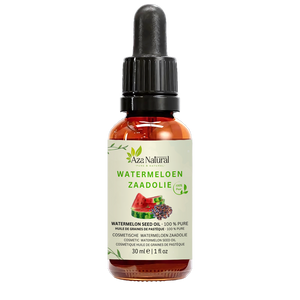
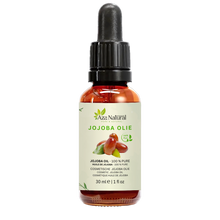
Watermelon seed oil is the plant oil pressed from the seeds of the watermelon, Citrullus lanatus, a trailing plant of the cucumber family that comes from southern Africa. On the label of our watermelon seed oil the ingredient reads Citrullus Lanatus Seed Oil, and there is no second ingredient. The same oil is sold as Kalahari oil or Ootanga oil, names that refer to the regions the seeds come from, not to a different oil. It is light yellow and thin, with a faint, slightly nutty smell, and comes in a 30 ml and a 100 ml bottle with a pipette.
Many people search for 'watermelon seed oil benefits' or search for 'watermelon seed oil for oily skin'. We make no claim about what this oil does in or under the skin or to the hair: the label says nothing about that, and neither do we. What you can check yourself is what the label says, that the oil is thin and absorbs with a remarkably dry finish, that it does not smell of melon, and how to use it, in what amount. That is what this guide is about.
Watermelon seed oil at a glance
- Label: Citrullus Lanatus Seed Oil, the only ingredient.
- Plant: the watermelon, Citrullus lanatus; the oil comes from the seeds, not from the flesh.
- Other names: Kalahari oil, Ootanga oil.
- Colour and smell: light yellow; faint and slightly nutty, not of melon.
- Texture: thin; absorbs fast and leaves a remarkably dry finish, without shine.
- Use: face, also by day and under make-up; base for a home-made serum; hair ends; external use only.
- Bottle and storage: 30 ml or 100 ml with pipette; cool, dark and tightly closed.
Where the seeds come from
The watermelon is native to southern Africa, where wild and cultivated melons have been grown in the Kalahari for a very long time, and the seeds have long been dried, roasted and pressed there. A single melon holds hundreds of flat black seeds, and it is those seeds, not the sweet red flesh, that the oil comes from; the trade names Kalahari oil and Ootanga oil point to that origin. The label of this bottle names one ingredient and gives no country of origin, pressing method or shelf life, and we add none. Our supplier provides no ingredient breakdown for this oil, so we quote none here.
Why it does not smell of melon
The smell of a watermelon sits in the water of the fruit, in compounds that dissolve in water and not in oil. A pressed seed oil does not carry them. What you smell when you open the bottle is faint and slightly nutty, like the seed itself, and on the skin it is gone within a minute. Anyone who expects a melon-scented oil will be disappointed; anyone who wants an oil that does not compete with a cream or a perfume will be pleased.
Why it feels so dry
This is the reason people choose it. Two or three drops on the face absorb within a minute and leave the skin feeling smooth but not oiled, without shine; you can put a cream or make-up over it straight away. Among the oils in the shop it is one of the driest to the touch, next to raspberry seed oil and hazelnut oil, and it is the one to reach for if a richer oil such as sweet almond oil feels too heavy. That dry feel comes with one duty: an oil this light consists largely of unsaturated fat and turns old sooner than a butter, so it is kept cool, dark and closed.
On the face
Two or three drops spread over lightly damp skin after cleansing, or pressed in with the flat of the hand. It absorbs fast and does not shine, so it works in the morning under a day cream or make-up as well as at night on its own. Three drops is about 0.15 ml, so a 30 ml bottle lasts around two hundred applications, more than six months at once a day.
As the base of a home-made serum
Watermelon seed oil can make up a large part of the oil phase of a serum or a face oil, and it makes a heavier oil or butter in a blend noticeably lighter without changing its smell. A simple face oil: three parts watermelon seed oil to one part of a richer oil such as pomegranate seed oil, in a clean 30 ml pipette bottle; three to four drops a time. In a whipped body butter, a spoon of watermelon seed oil in place of part of the heavier oil gives a lighter, faster-absorbing result. Label the bottle, keep it cool and finish it within a few months. Other oils to blend with are in the carrier oils collection.
On the hair ends
A single drop rubbed between the palms and smoothed through the ends of dry hair. The oil does not weigh the hair down and does not leave it feeling greasy, which makes it one of the few oils that suit fine hair; even so, one drop is enough, and two is the most for thick hair.
How much you use and which bottle to choose
For the face and the hair ends, 30 ml: at two or three drops a day it lasts more than six months, and the bottle is empty before the oil is old. If you use the oil as the base of your own serums or on the body, half a teaspoon per arm or leg, choose 100 ml. Both bottles hold the same oil, in dark glass with a pipette. More oil than the skin takes up stays on top of it, and with this oil that is quickly noticeable, because the whole point of it is that it does not.
How to store it
Cool, dark and tightly closed, not in the bathroom and not in the sun, and finish an opened bottle within a year. This is an oil with a lot of unsaturated fat, and it turns rancid sooner than a saturated one; your nose tells you when: fresh, it smells faint and nutty; old, it smells sharp or stale. If it does, do not use it any more.
What to watch out for
External use only: this is a cosmetic oil for skin and hair, not for cooking and not to be swallowed, even though watermelon seeds are eaten roasted in some kitchens. If your skin is sensitive, apply a drop to the inside of the elbow or the wrist first and wait a day. Avoid contact with the eyes and rinse with lukewarm water. Keep out of reach of children. Watermelon is not on the European list of fourteen allergens and the label names no fragrance, but there is no analysis certificate for this batch, so we promise nothing about traces. Other single-ingredient oils are in the pure oils collection.
Frequently asked questions
Does watermelon seed oil smell of melon?
No. The smell of the fruit is water-soluble and does not come through in the seed oil; the oil smells faint and slightly nutty.
Is Kalahari oil the same thing?
Yes. Kalahari oil and Ootanga oil are trade names for the same seed oil, after the regions the seeds come from.
Can I wear it under make-up?
Yes. It absorbs within a minute and leaves a dry finish without shine.
Can I mix it with a heavier oil?
Yes, and that is one of its strengths: it makes a heavier oil or butter in a blend noticeably lighter without changing the smell.